Martin Eder
Marco Habeck
Martin Wühler
Galerie Supper
Kreuzstraße 3
D-76530 Baden-Baden
11.05.2014 – 27.07.2014
Exhibiton views: Marco Habeck
Martin Eder
Marco Habeck
Martin Wühler
Galerie Supper
Kreuzstraße 3
D-76530 Baden-Baden
11.05.2014 – 27.07.2014
Exhibiton views: Marco Habeck
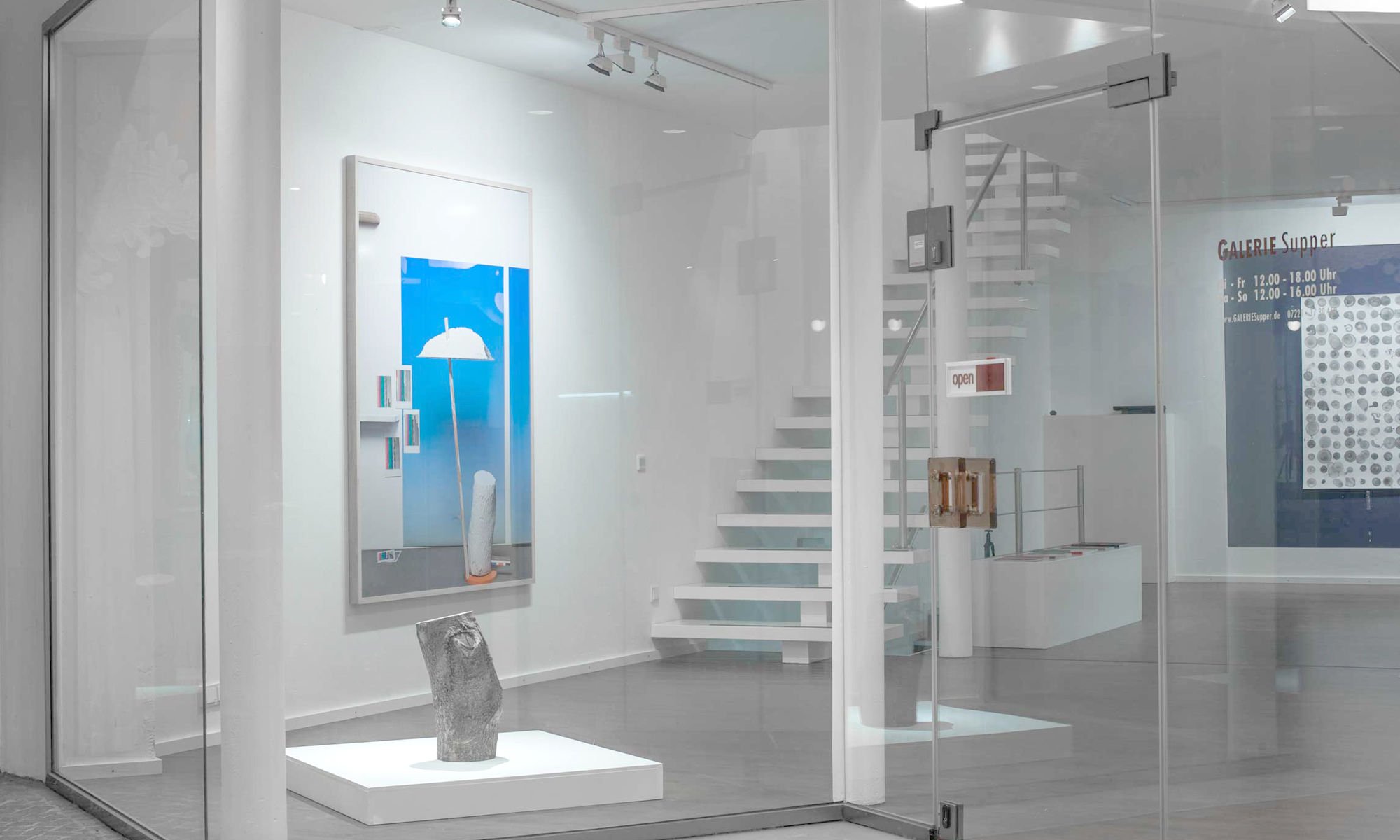
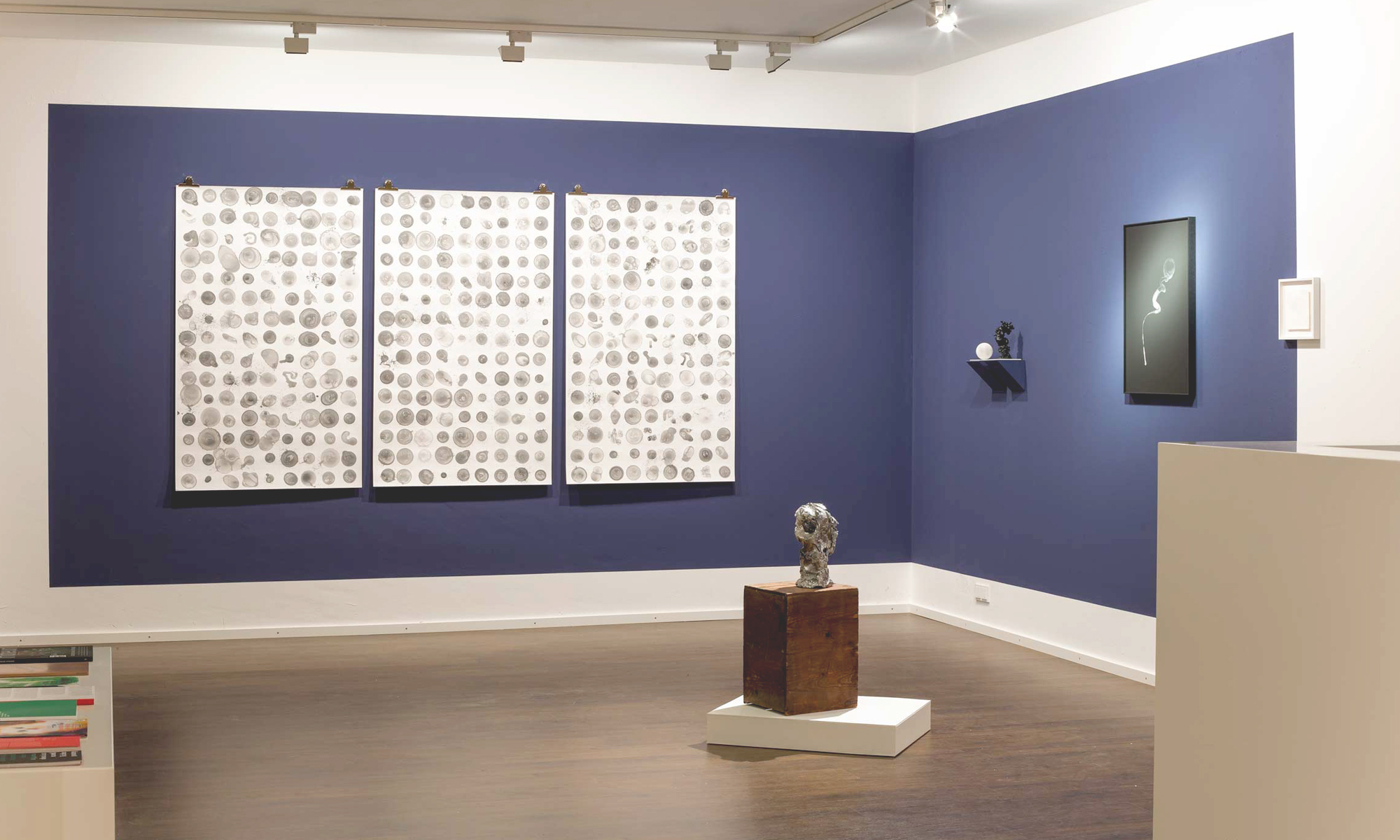
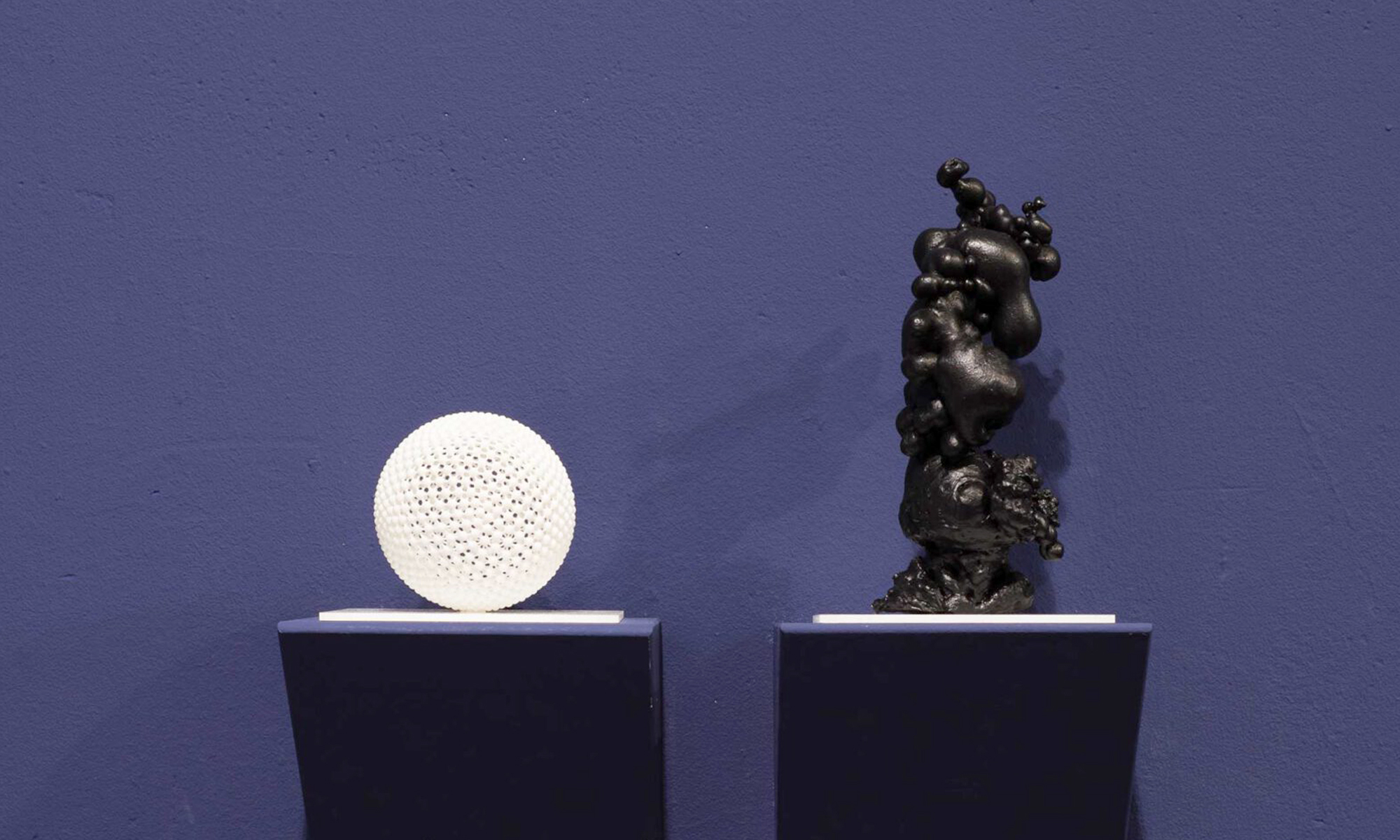
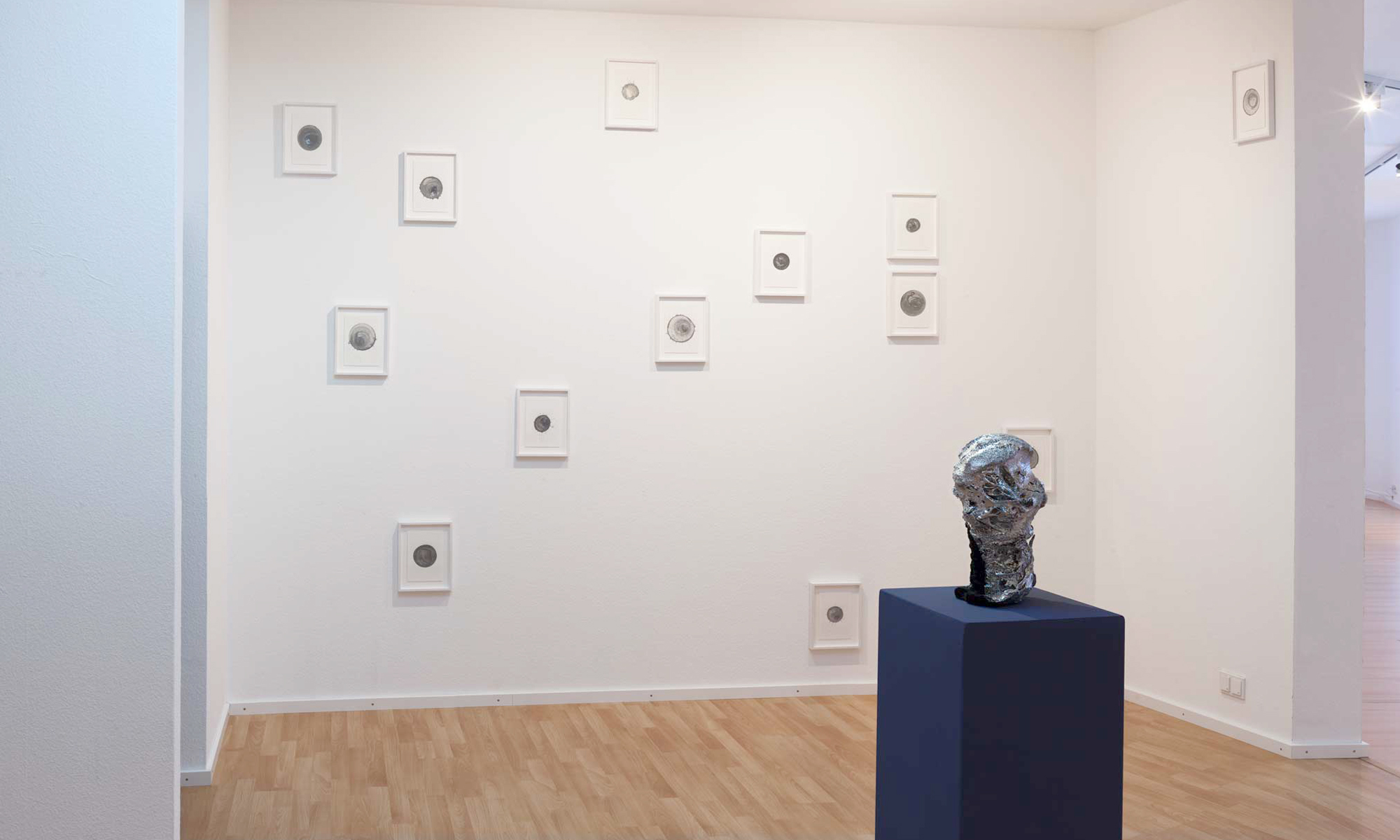
The new exhibition series “Zu Gast bei Supper” temporarily expands the gallery’s existing program with a curated group exhibition featuring works by three artists who will be exhibiting together in Baden-Baden for the first time. The series, which takes place once a year, kicks off with the exhibition “Artificial Paradoxes,” curated by Hendrik Bündge of the Staatliche Kunsthalle Baden-Baden.
“Artificial Paradoxes” brings together the aesthetic contrasts reflected in the diverse works of Martin Eder (*1968), Marco Habeck (*1983), and Martin Wühler (*1983): reality and its fiction, planning and chance, or the deliberately ironic subversion of common motifs.
The latter is evident in Martin Eder’s watercolors: provocative female nudes are combined with depictions of cats, initially giving the impression of kitsch. The saccharine color palette of the works is countered by a masterful command of the motifs in wet-on-wet technique, which pushes the boundaries of reality. In his sculptures, Styrofoam heads are doused with corrosive liquid, and this state is subsequently fixed with a metallic finish. The result oscillates between planning and chance, endowing the heads with a dual memento mori function.
Marco Habeck simulates the seemingly real using photographic techniques. For him, a tree stump becomes the starting point of a digital narrative, whose individual elements in turn raise questions. A digitally scanned pile of gravel becomes a cloud or a parasol, confronting the viewer with the expectations inherent in their conception of the world. While photography has always been imbued with a representational character, attempts were already being made in the late 19th century to push the boundaries of technical possibilities through manipulations such as staged death, ghostly apparitions, or double exposures, in order to wrest a genuine impression of simulation from the medium. In Habeck’s work, photography undergoes a contemporary expansion: using techniques such as rendering and the application of countless image-editing programs, he creates works that attest to the advance of the digital: the simulation of reality and the questioning of the artwork.
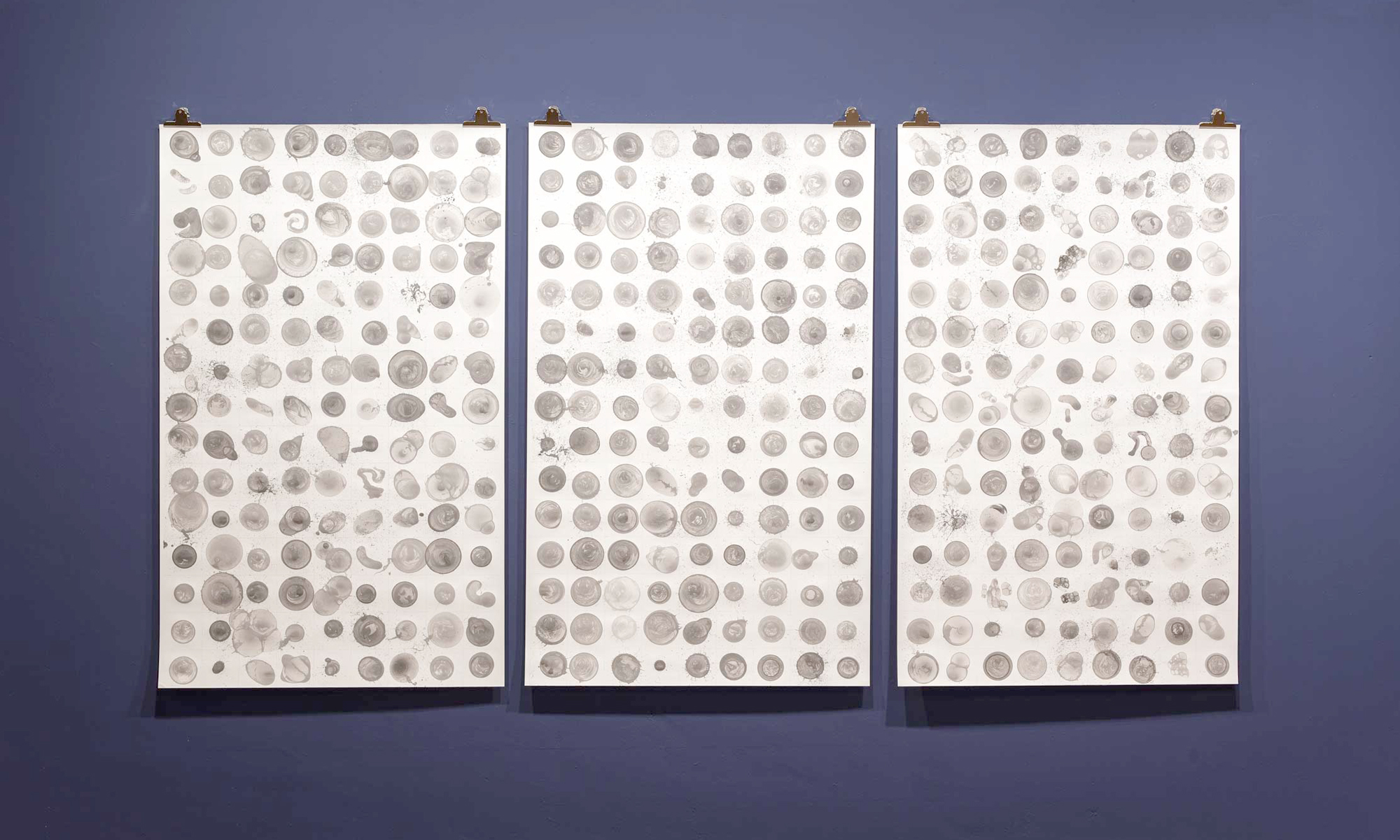
Martin Wühler’s large-format triptych, on display in the exhibition, follows a strict serial grid, within whose equally sized squares he has captured impressions of soap bubbles on the surface of the paper. The potentially explosive mixture of glycerin, glucose, surfactants, and soapy water, which Wühler spent years perfecting, also represents an attempt to make categories such as space and time visible. In individual works featuring soap bubbles, Wühler additionally mixed in chrome paint, which, depending on the angle of the light, creates fascinatingly iridescent reflections. The paradox of artificiality as a critique of a conception of art strongly influenced by 19th-century philosophy thus constantly challenges our understanding of art.
Martin Eder was born in Augsburg in 1968. He studied communication design at Augsburg University of Applied Sciences from 1986, graduating with a diploma in 1992. From 1993 to 1995, he studied at the Academy of Fine Arts in Nuremberg, and from 1996 to 1999, he studied under Eberhard Bosslet at the Dresden Academy of Fine Arts. There, he was a master student under Bosslet from 1999 to 2001.
Martin Eder is represented internationally by the galleries Eigen+Art, Berlin/Leipzig, and Hauser & Wirth, London/New York/Zurich. His works have been and continue to be featured in numerous solo and group exhibitions, including the second Prague Biennale in Poland, the Essel Museum in Klosterneuburg, Austria, the Gemeentemuseum in The Hague, Netherlands, the Neue Nationalgalerie in Berlin, the Kunsthalle Mannheim, and various renowned art associations.
Born in Erfurt in 1983, Marco Habeck completed his undergraduate studies in photography at the Academy of Visual Arts, Leipzig, from 2009 to 2011, where he has been studying in Prof. Heidi Specker’s photography class since 2011.The artist gained his first exhibition experience at the 5th Leipzig Festival of Photography, the Leipziger Baumwollspinnerei, Halle 14 – Center for Contemporary Art Leipzig, the Kulturbahnhof Kassel, and the Hungarian University of Arts in Budapest.
Martin Wühler was also born in Erfurt in 1983. From 2008 to 2010, he studied East Asian Art History and Sinology at Ruprecht Karl University of Heidelberg. From 2010 to 2012, he studied European Art History and Sinology at the University of Leipzig. Since 2012, he has been enrolled in the Media Art program at the Academy of Visual Arts, Leipzig.The artist held his first solo exhibitions at Trufanowstrasse 8 in Leipzig and at the Pretty Portal Gallery in Düsseldorf. He has participated in group exhibitions at venues including HALLE 14 – Center for Contemporary Art in Leipzig, the Kunsthaus Erfurt, and the Forum für Kunst in Heidelberg.