Works

selected works

Petrichor:
Umnachtung

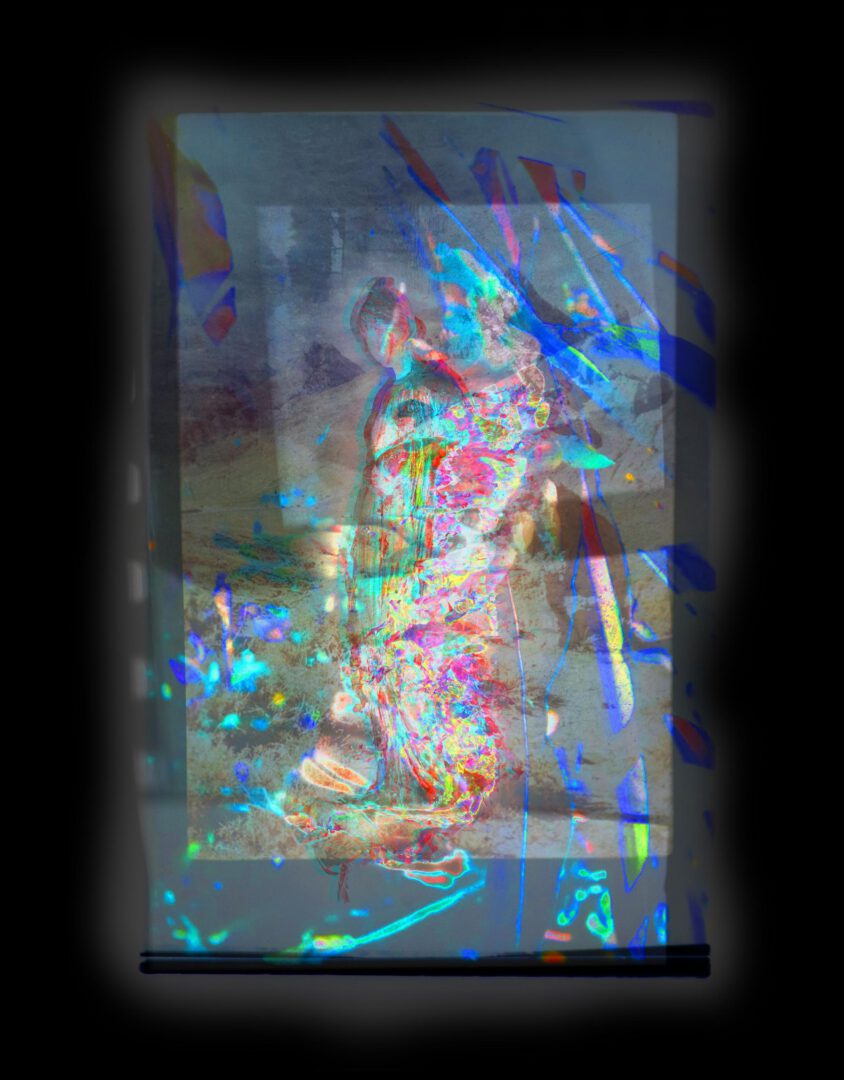
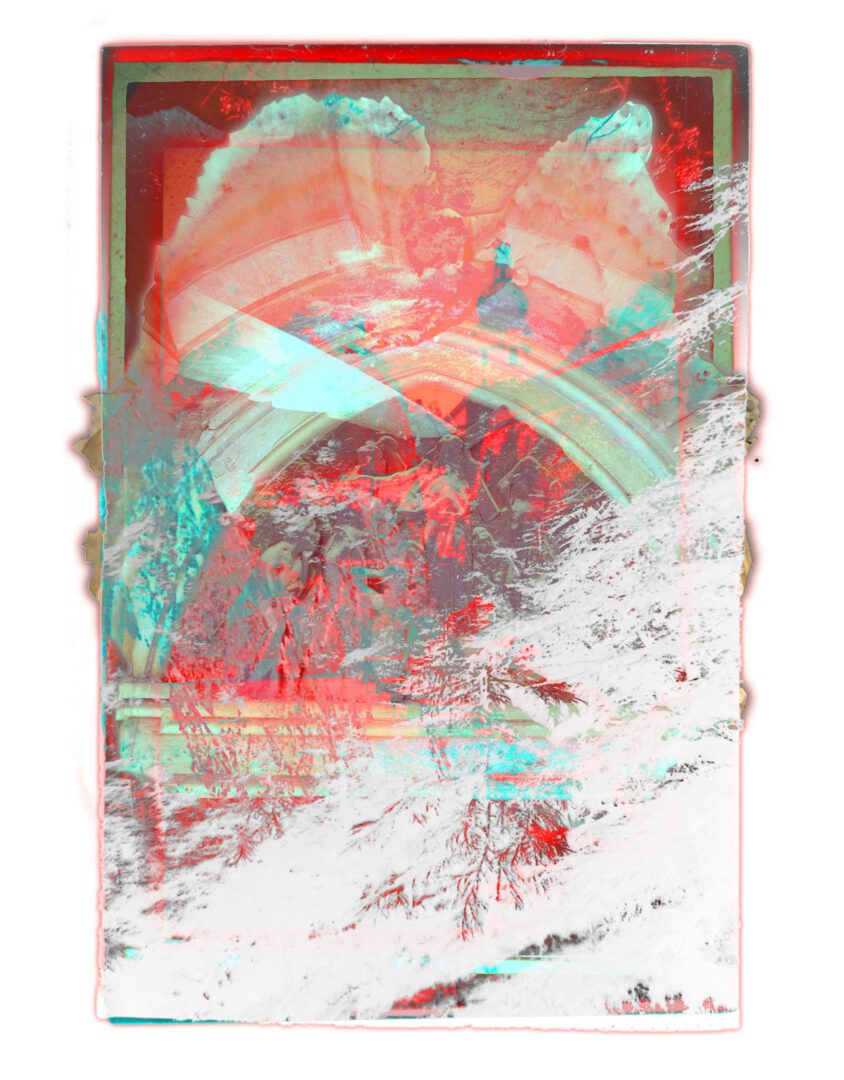
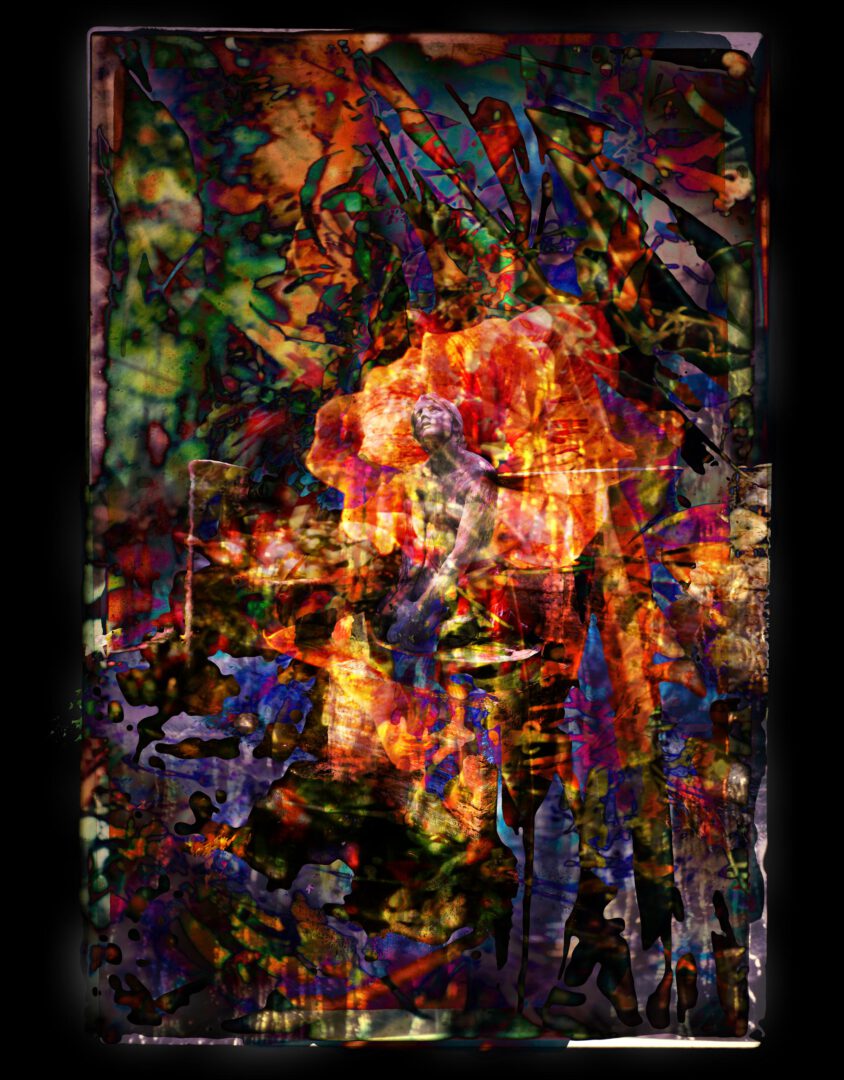
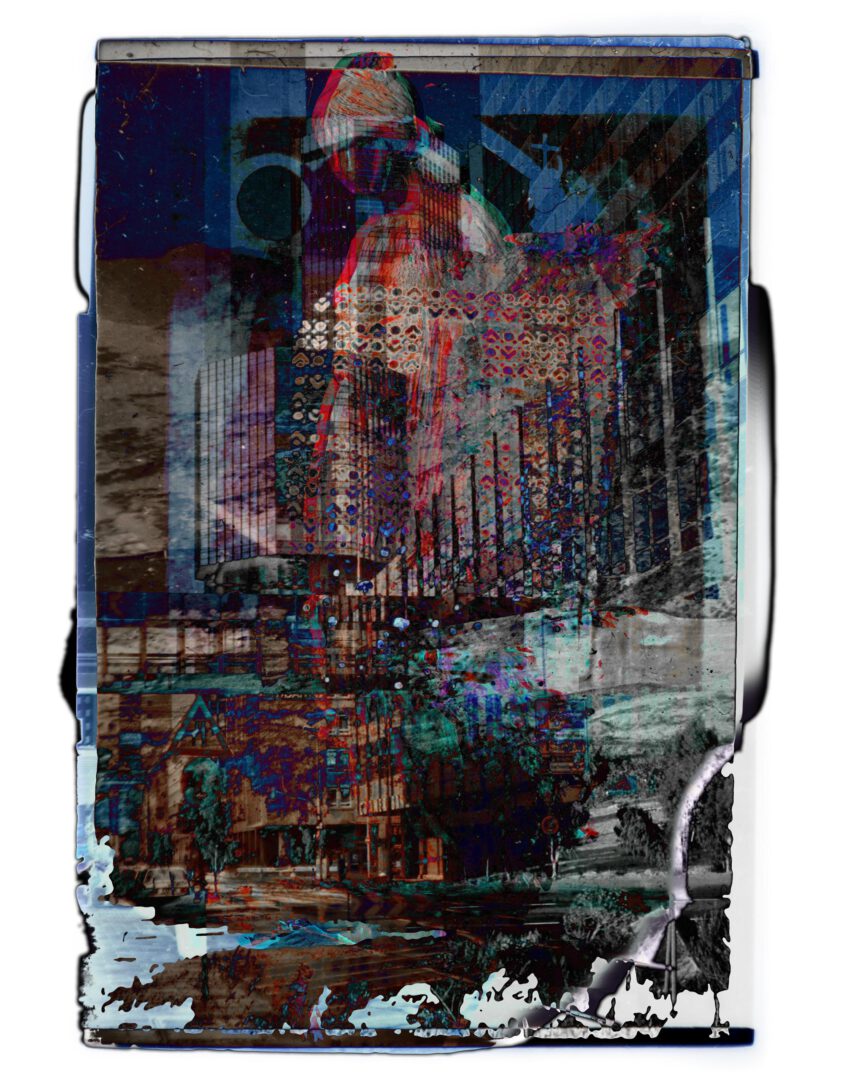
Petrichor—that sudden, electric breath released when rain strikes parched earth, a mingling of geosmin from soil bacteria, plant oils, and ozone. It is the scent of renewal after drought, of life stirring in what seemed dead. Yet in Martin Wühler’s ongoing series *Petrichor: Umnachtung*, this evocative term collides with *Umnachtung*—the Romantic German word for mental nightfall, derangement, the mind’s slow eclipse into darkness. 

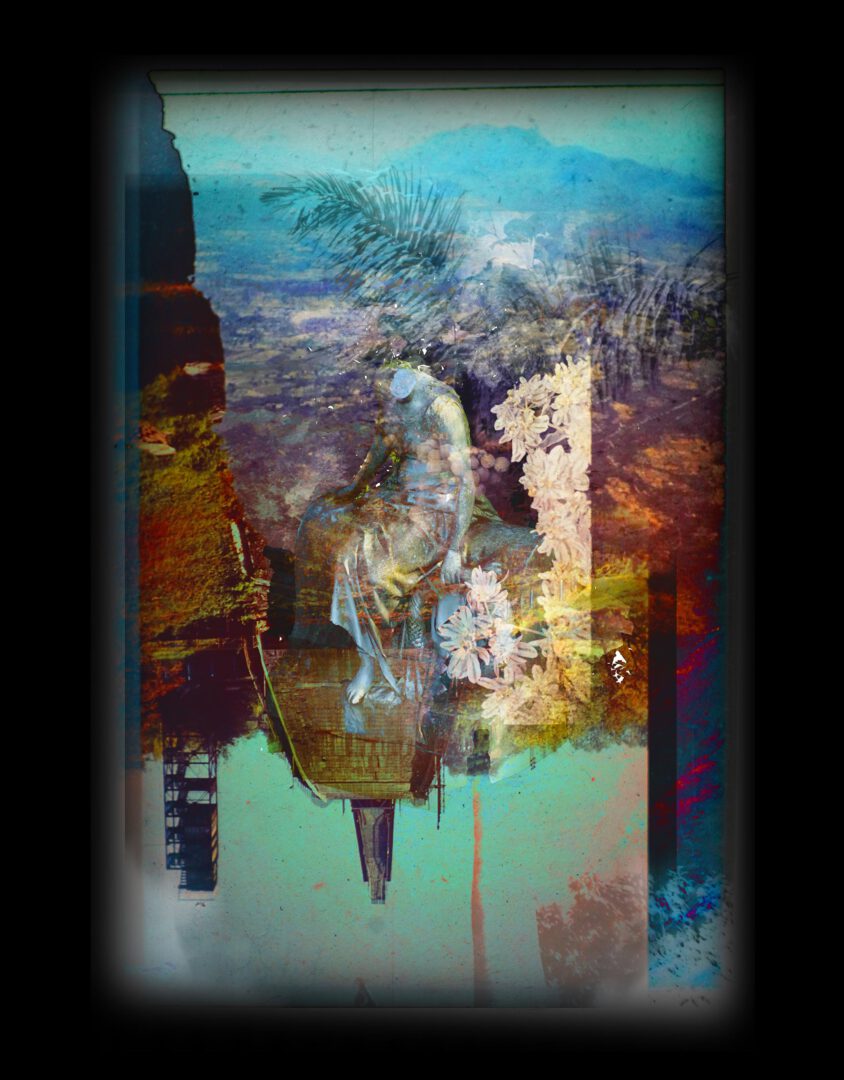
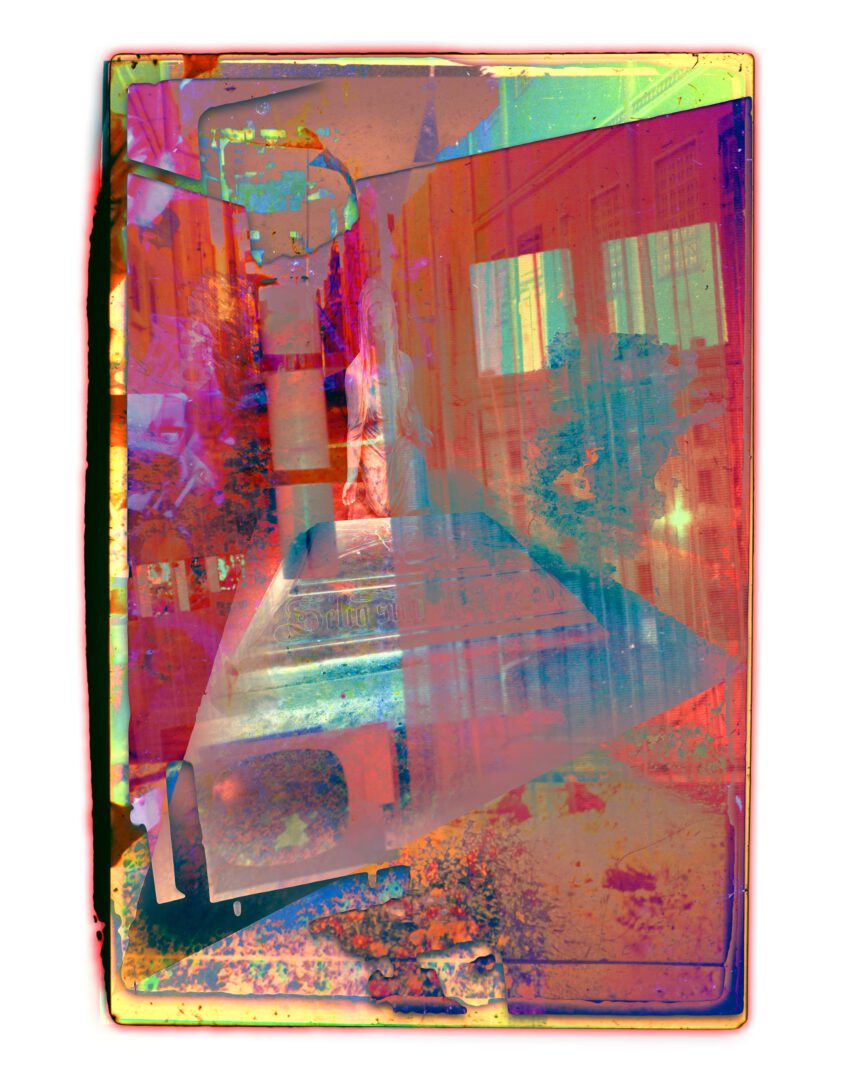
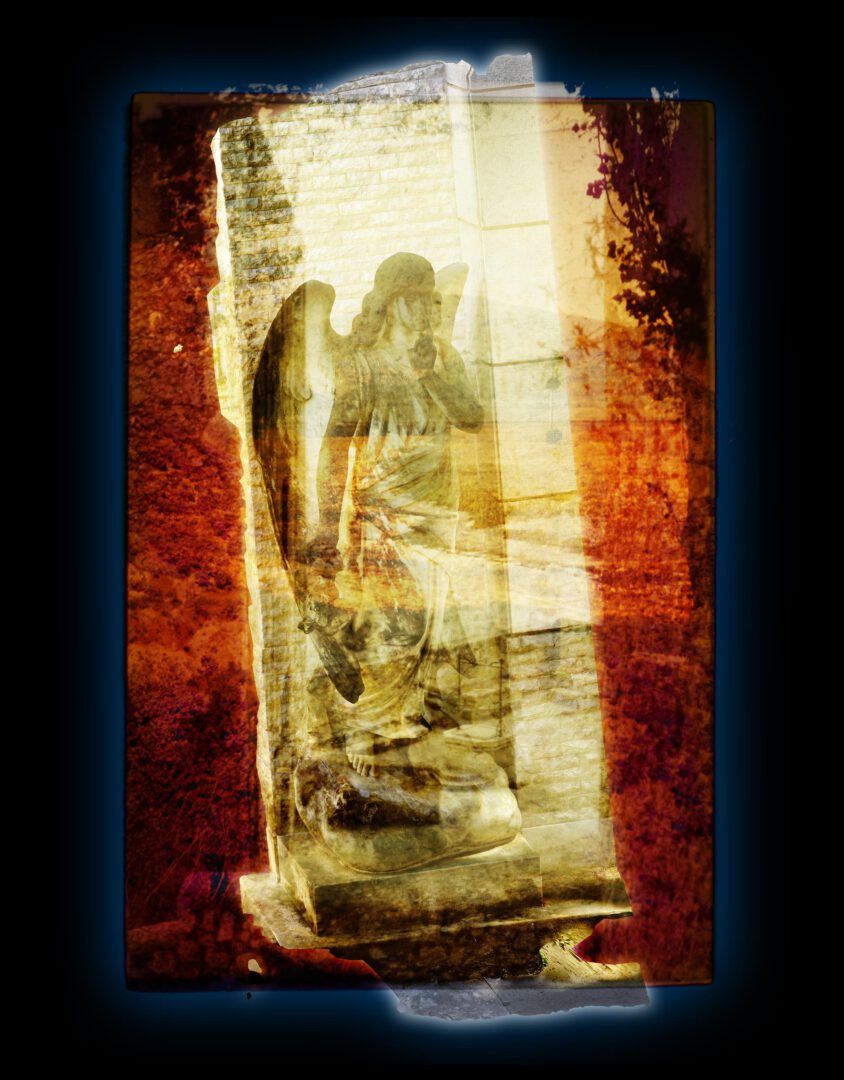
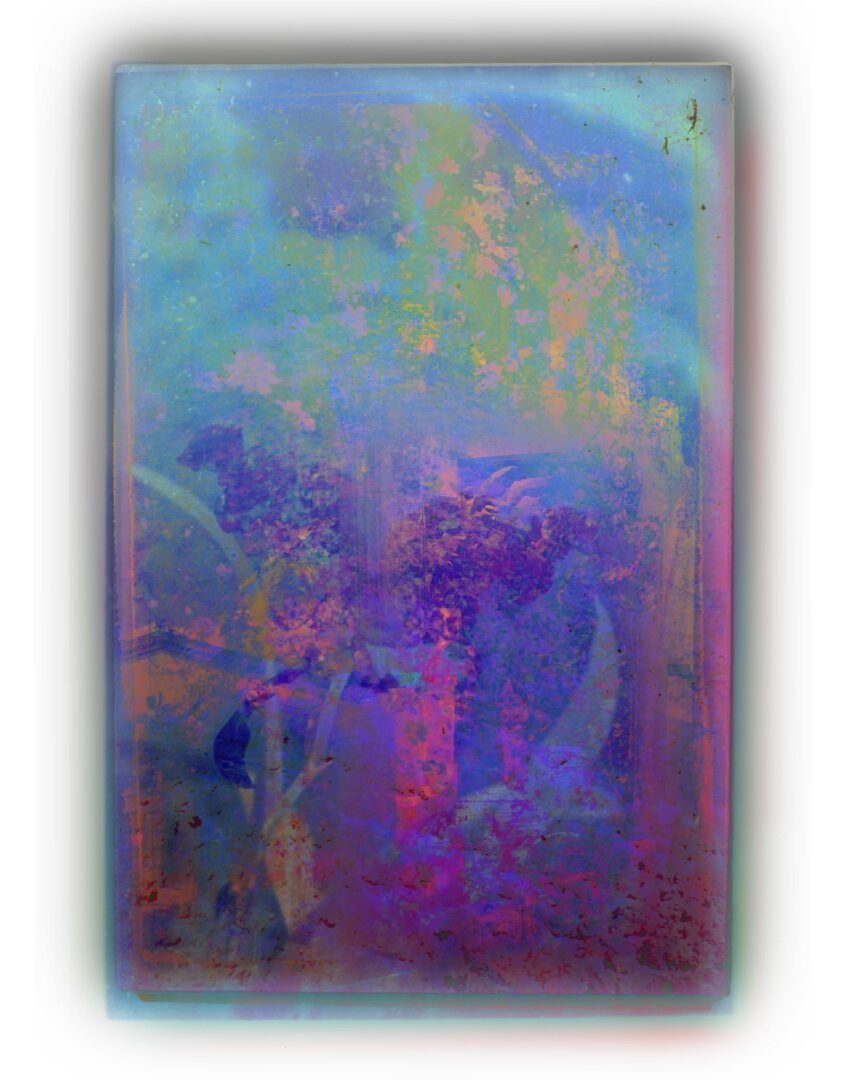
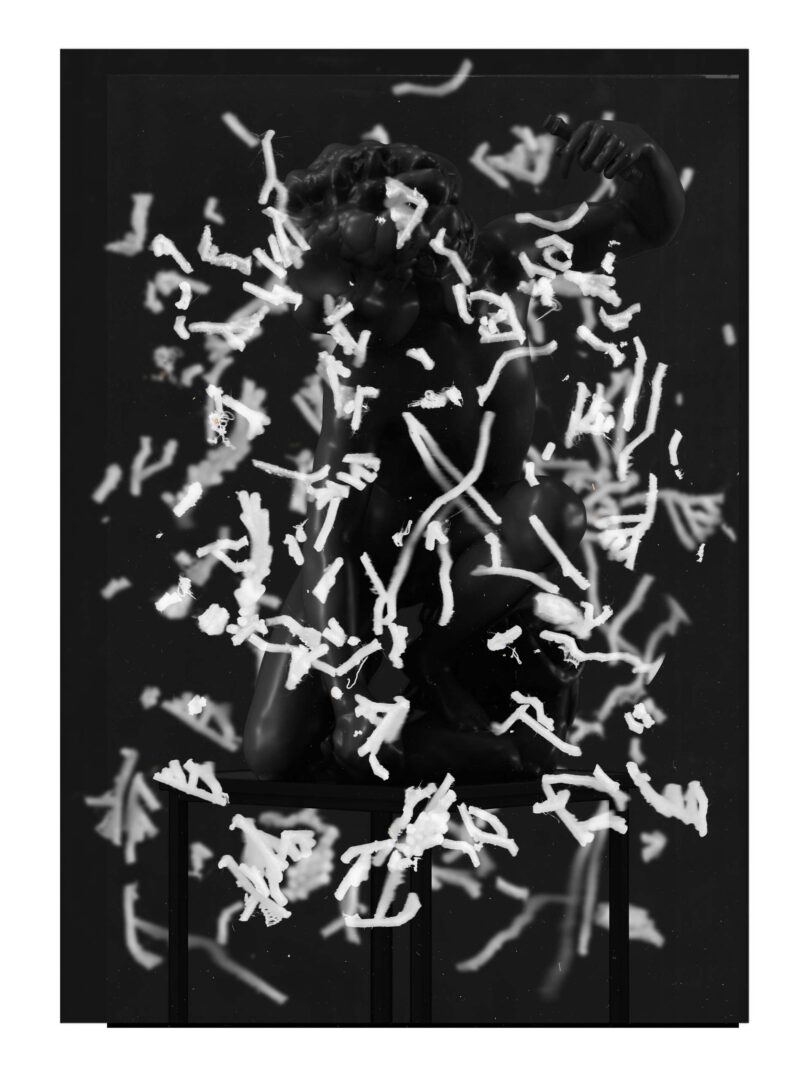
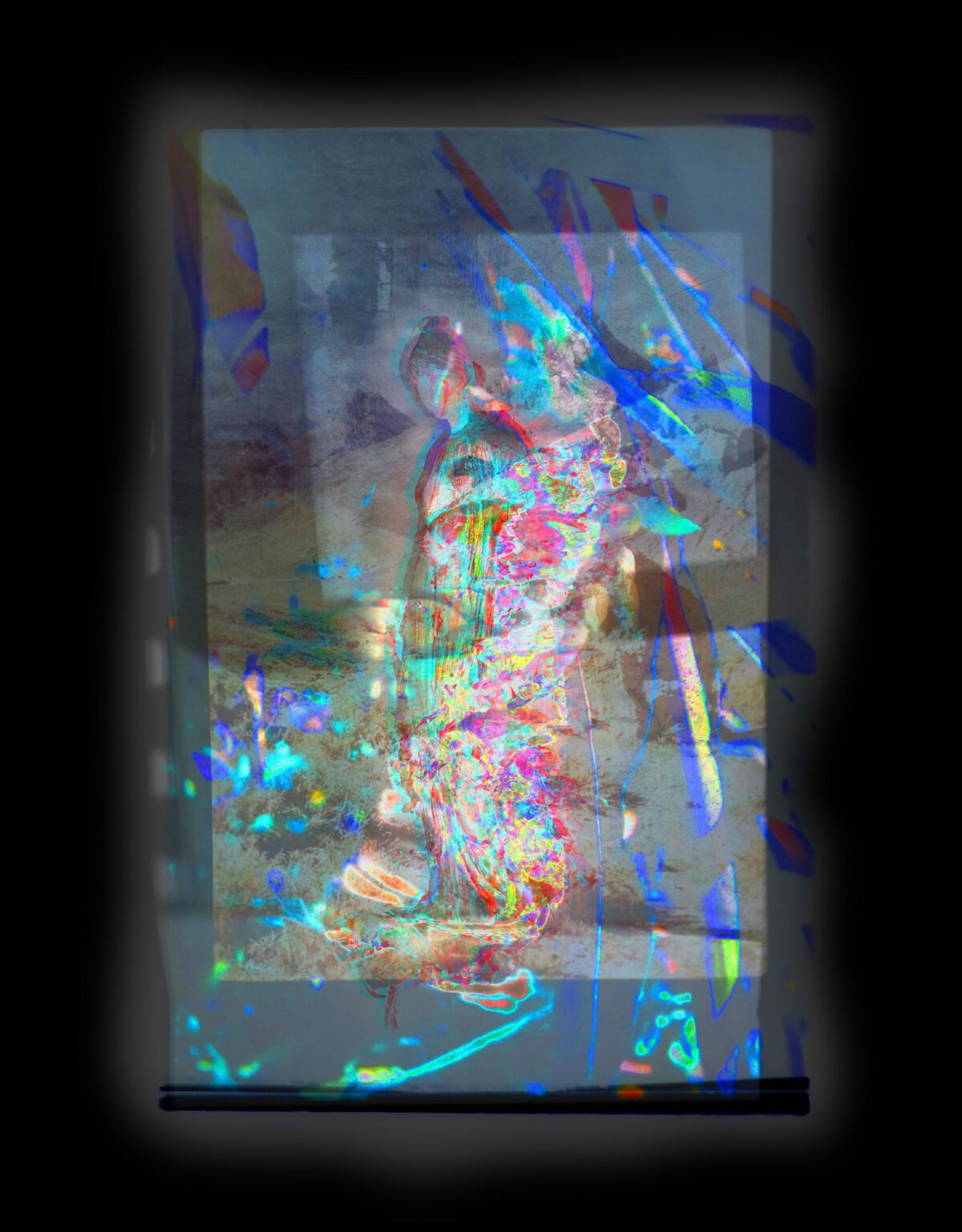
Wühler draws from two vast archives: 3D scans of eroded grave sculptures and thousands of digitized slides from his grandfather, who suffered from dementia in old age. A man who, during the DDR era, was permitted rare journeys into the capitalist abroad—Angola, Cuba, Libya, other corners of Africa—the grandfather’s images carry the saturated Technicolor glow of 1950s–70s *National Geographic* fantasies: lush landscapes, desert expanses, unfamiliar faces, East German winters, blooming flowers, and stranger intrusions (forbidden Western pornography, odd angles that whisper of possible Stasi surveillance). These slides, with their dust, scratches, broken glass, and film grain, possess genuine historical weight—a lost reality preserved in vivid, almost hallucinatory color.

In Wühler’s digital collages, the grave scans and grandfather’s dias merge and fracture. The resulting works are explosively chromatic, far removed from the monochrome melancholy of the *Epitaphe* slabs or the *Sand aus den Urnen* triptych. Forms dissolve into abstract patterns and swirling structures: a cemetery angel’s wing might bleed into Libyan dunes, Cuban streets fracture across a broken inscription, pornographic fragments tangle with pine forests and winter blooms. The process mirrors dementia itself—clear recollections loosening, overlapping, eroding into a vibrant yet disorienting haze. Traces of the original film strips remain visible, like stubborn remnants of a once-coherent narrative.

This project dialogues profoundly with German Romanticism’s obsession with *Umnachtung*. Friedrich Hölderlin, who descended into decades of mental darkness, wrote in his later fragments of the mind’s night:

“Yet still are you holy to me, as the might of the earth / That bore you away, audaciously perishing!”

Or, in the spirit of his late hymns, the sense of divine fire consuming mortal reason. Novalis and others in the Romantic circle similarly probed the “night side” of nature and psyche—the productive darkness where reason yields to dream, memory to myth. Wühler’s bursting colors and dissolving forms channel this Romantic inheritance: beauty and terror entwined, the petrichor scent of rain on graves evoking both mourning and strange rebirth.

The series remains unfinished, with an ambition of at least seventy images—one for each year of the grandfather’s life. It is an act of filial piety and artistic reckoning, transforming personal loss and historical fracture into a larger meditation on how memory, like those old slides, eventually succumbs to its own vivid entropy. In the context of Wühler’s broader practice—eroded stone, hot-glue fatigue, Celanian ash—*Petrichor: Umnachtung* offers a chromatic counterpoint: not the black tar of exhaustion or the pale glue of fragility, but a riotous, rain-drenched twilight of the mind.

One stands before these works and inhales the earthy promise of petrichor while feeling the Romantic night descend. Memories fall like warm rain on dry tombs, releasing their scent before they vanish into pattern and abstraction. In that dissolution lies both elegy and a stubborn, almost holy persistence.

Wundmal: Atavismen

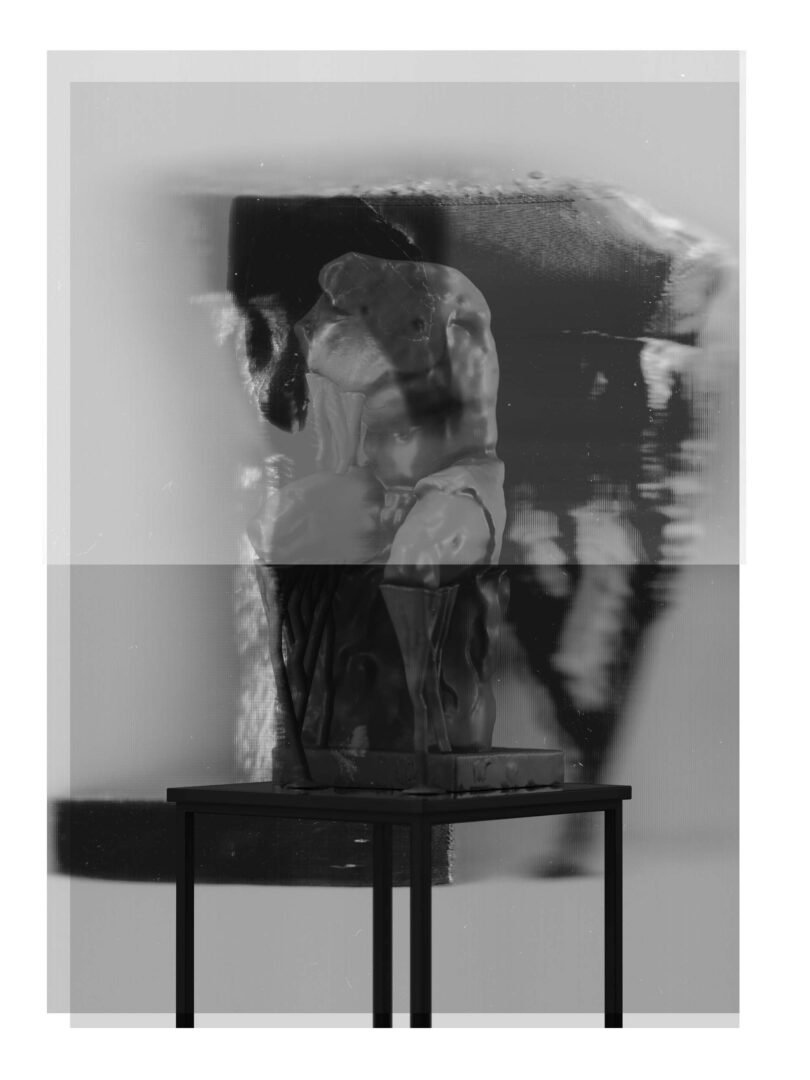
*Atavismen*—atavisms—are those startling evolutionary reversions in which long-dormant ancestral traits suddenly reassert themselves: a child born with a tail, a horse with extra toes, or, in the cultural realm, the uncanny return of archaic forms, instincts, and archetypes beneath the thin veneer of modernity. In Martin Wühler’s new series *Wundmal: Atavismen*, this biological and mythic concept becomes both subject and method. *Wundmal* (wound-mark, stigmata) supplies the thematic wound: the persistent, unhealing injury that classical bodies carry into the present.

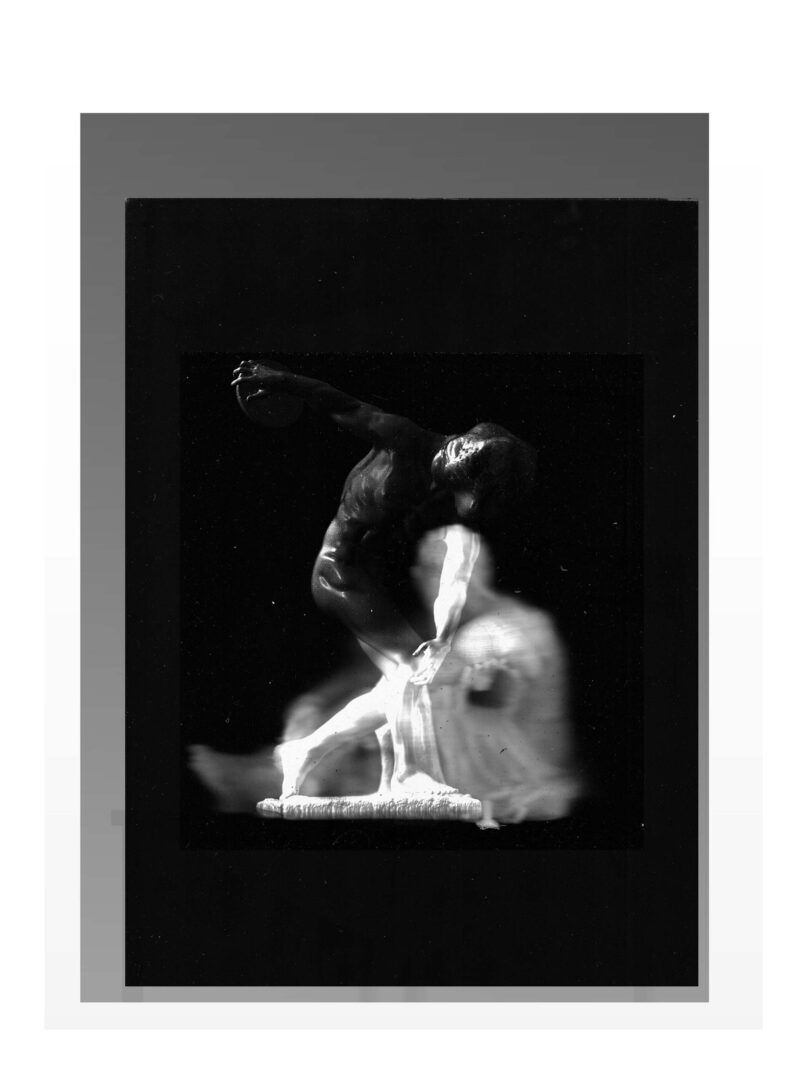
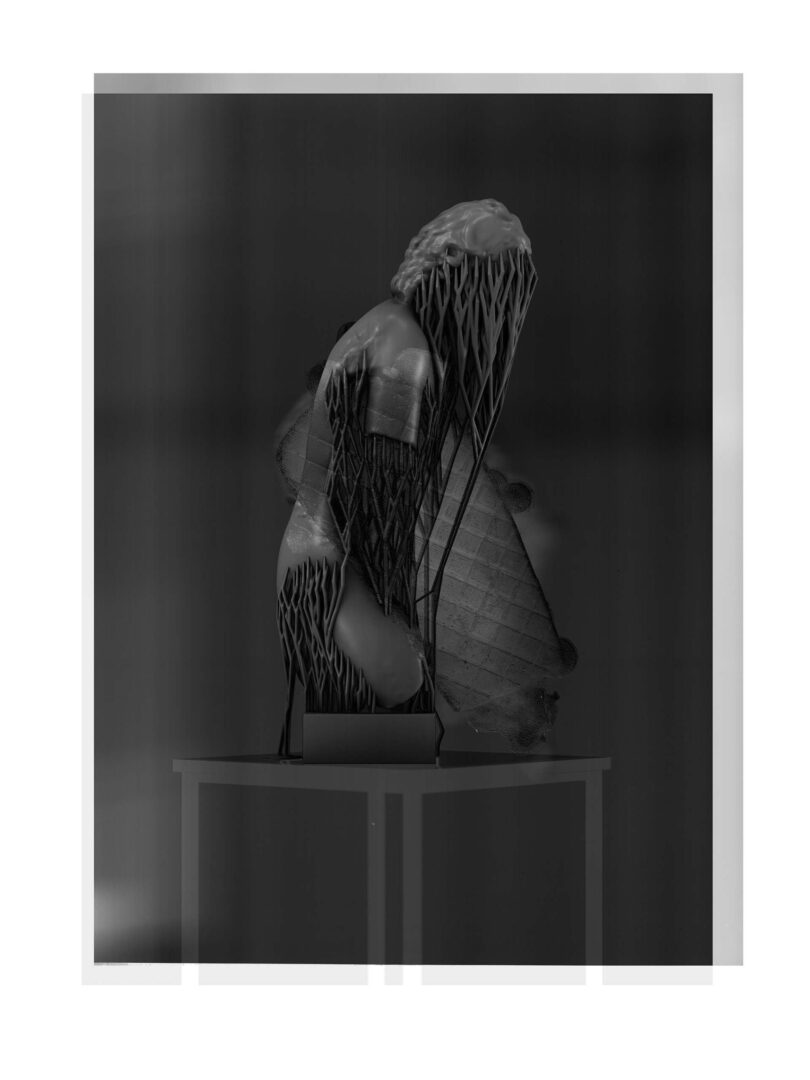
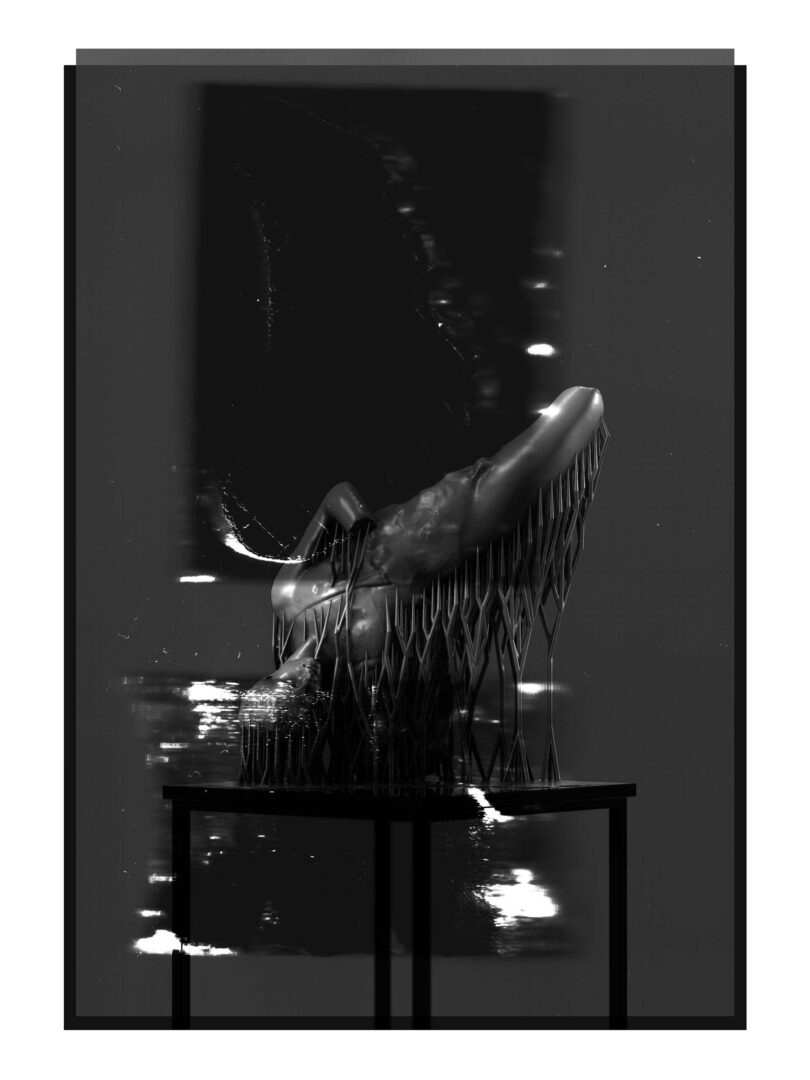
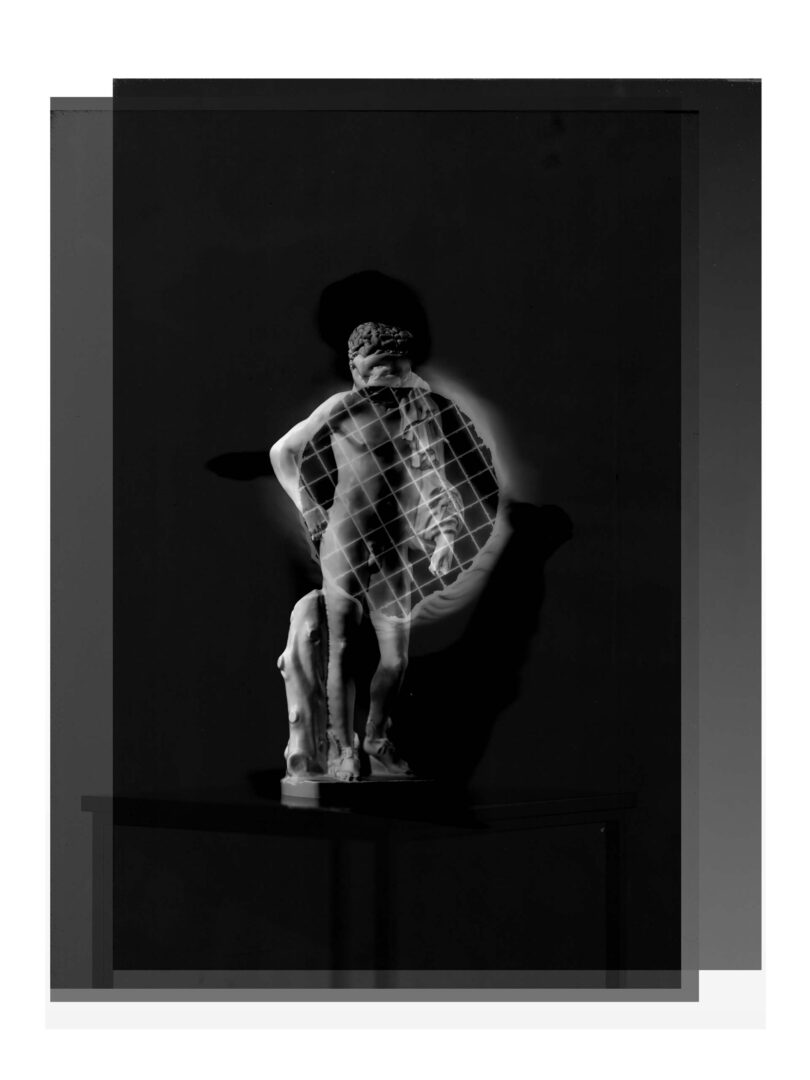
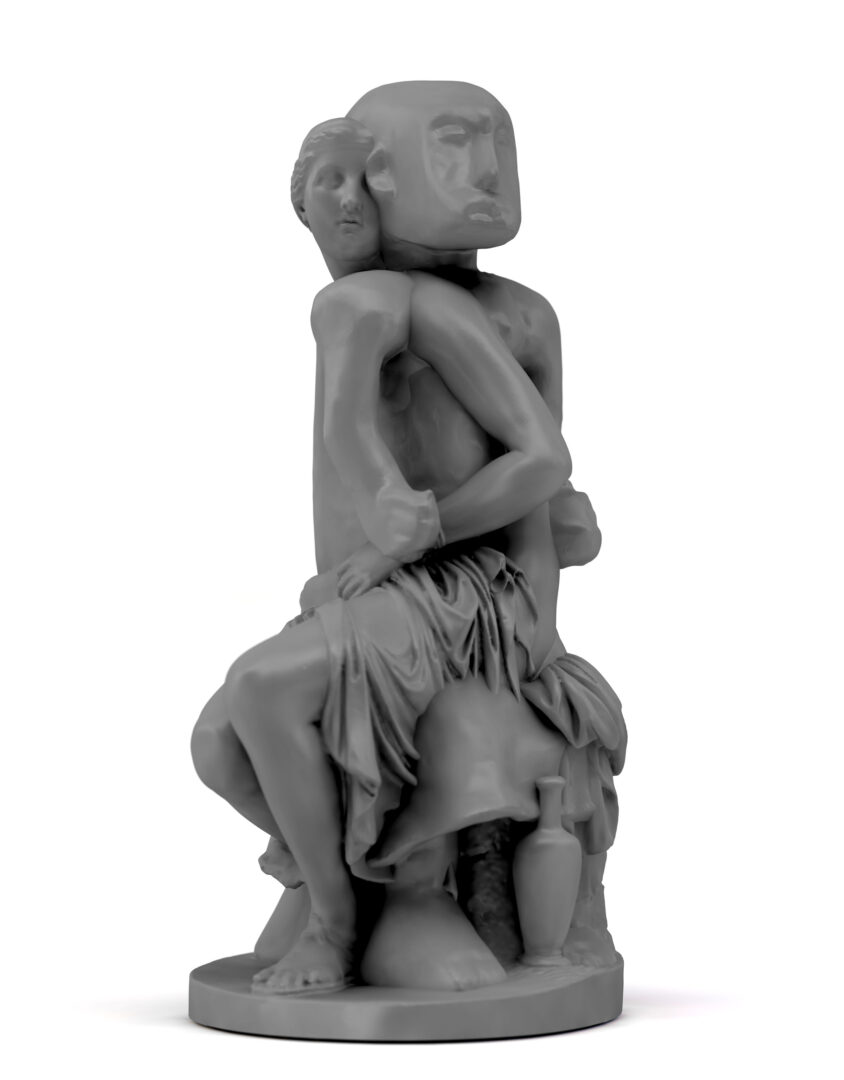
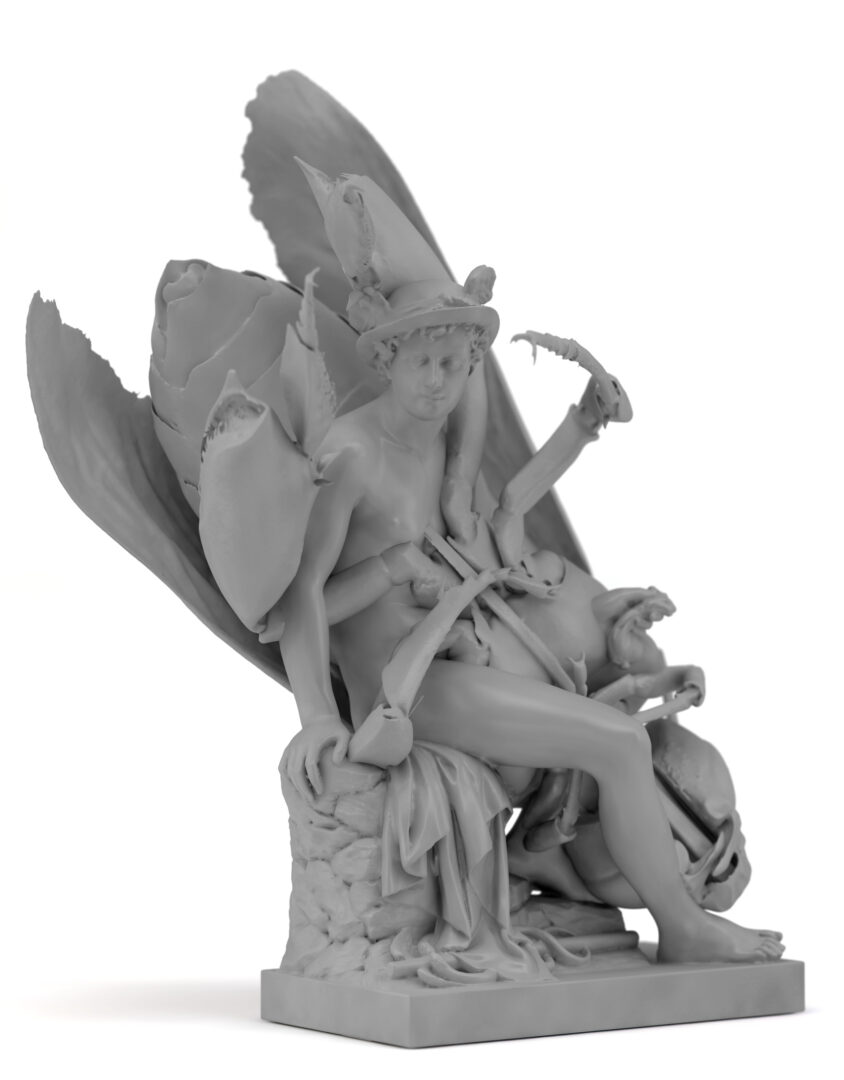
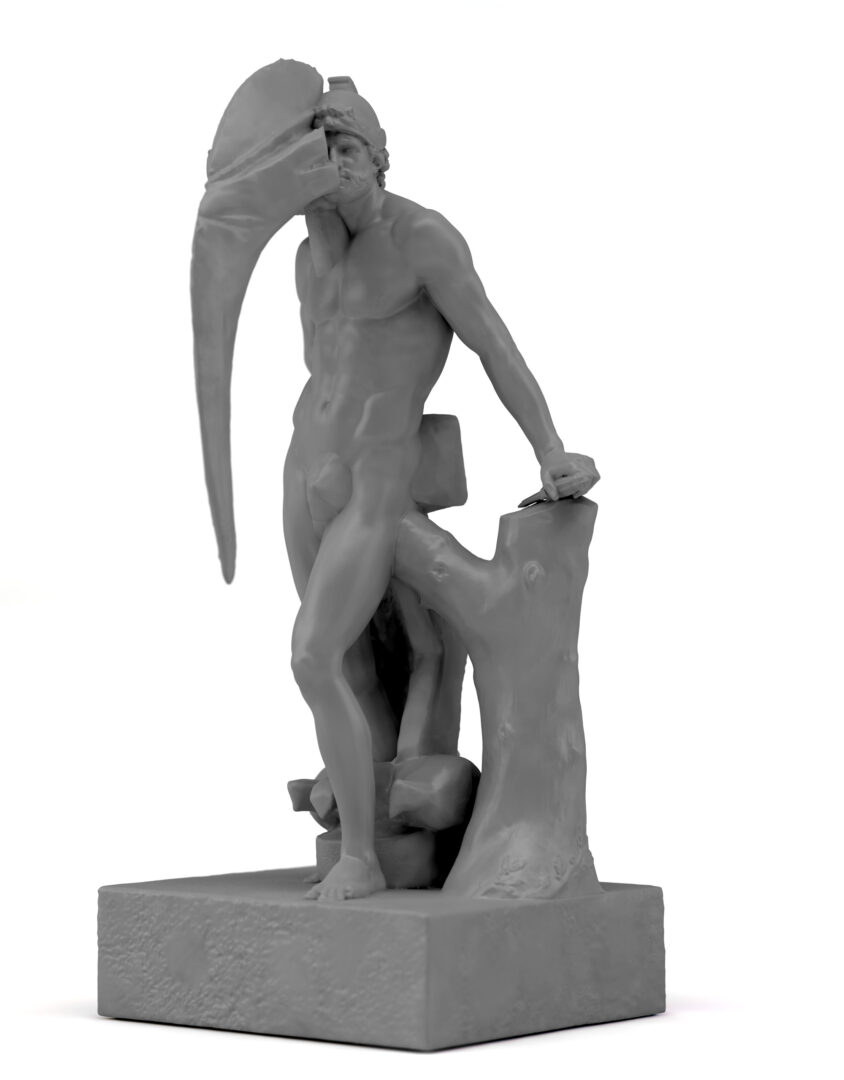
The works consist of 3D-printed figures drawn from the Western canon’s most enduring archetypes—The Thinker, Discobolus, Eros, Icarus, Narcissus, Hermes—yet deliberately fractured. Wühler begins with digital scans or models of these icons, then subjects them to intentional deformations: crushed or elongated heads, twisted torsos, limbs warped by algorithmic stress. He further invites the technical failures inherent to 3D printing itself—layer shifts, stringing, collapsing supports, material fatigue—allowing the machines’ own limitations to scar the forms. The resulting objects are hybrids: pre-image and after-image collapsed, original ideal and its ruined descendant fused in one body. Some prints bear the clean wounds of precise digital cuts; others show the raw, accidental lesions of print failure. They are stigmata made manifest in plastic.

These are not nostalgic homages to antiquity. They are atavistic revenants—bodies that reach backward through time only to arrive damaged in the present. The Thinker’s famous pose is broken at the neck, his contemplation literally weighed down. Discobolus spins no more; his discus arm melts into the shoulder. Eros and Narcissus blur into one another in self-regarding distortion. Icarus’s wings fail not in mythical wax but in extruded filament. Hermes, messenger of the gods, stands with a head half-submerged in the print bed’s error.

In *Wundmal: Atavismen*, Wühler treats the classical body as a site of recurring trauma. The wounds are both historical (the repeated breaking of ideals across centuries) and contemporary (the violence of digital reproduction and its inevitable entropy). *Atavismen* is the first chapter; further groups are promised, suggesting a longer excavation of the human form as carrier of inherited damage and stubborn recurrence.

There is something quietly brutal and compelling in these small-to-medium printed figures. They stand as evidence that the archetypes never truly die—they simply reappear, limping, deformed, yet strangely vital, bearing the fresh wounds of our attempts to revive them. In Wühler’s hands, atavism is not regression but revelation: the past forcing its way back through the cracks of the present, marked, as always, by the stigmata of time.

Der Sand
aus den Urnen

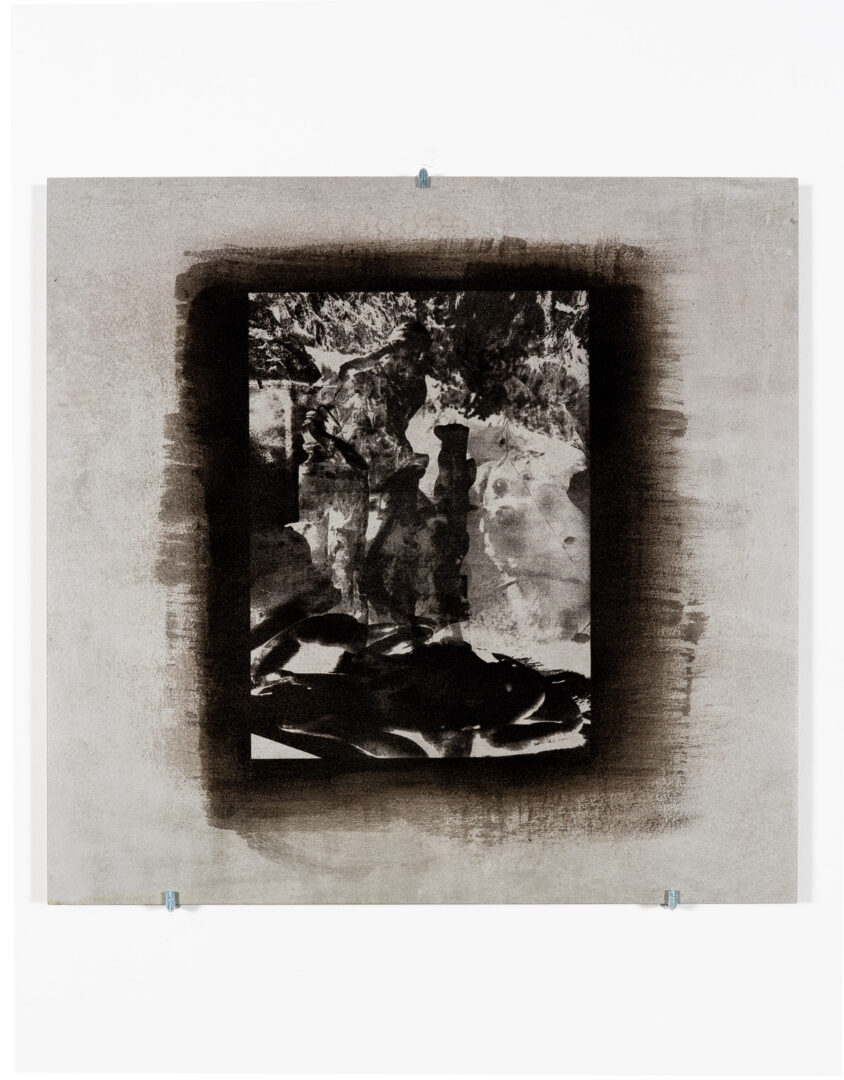
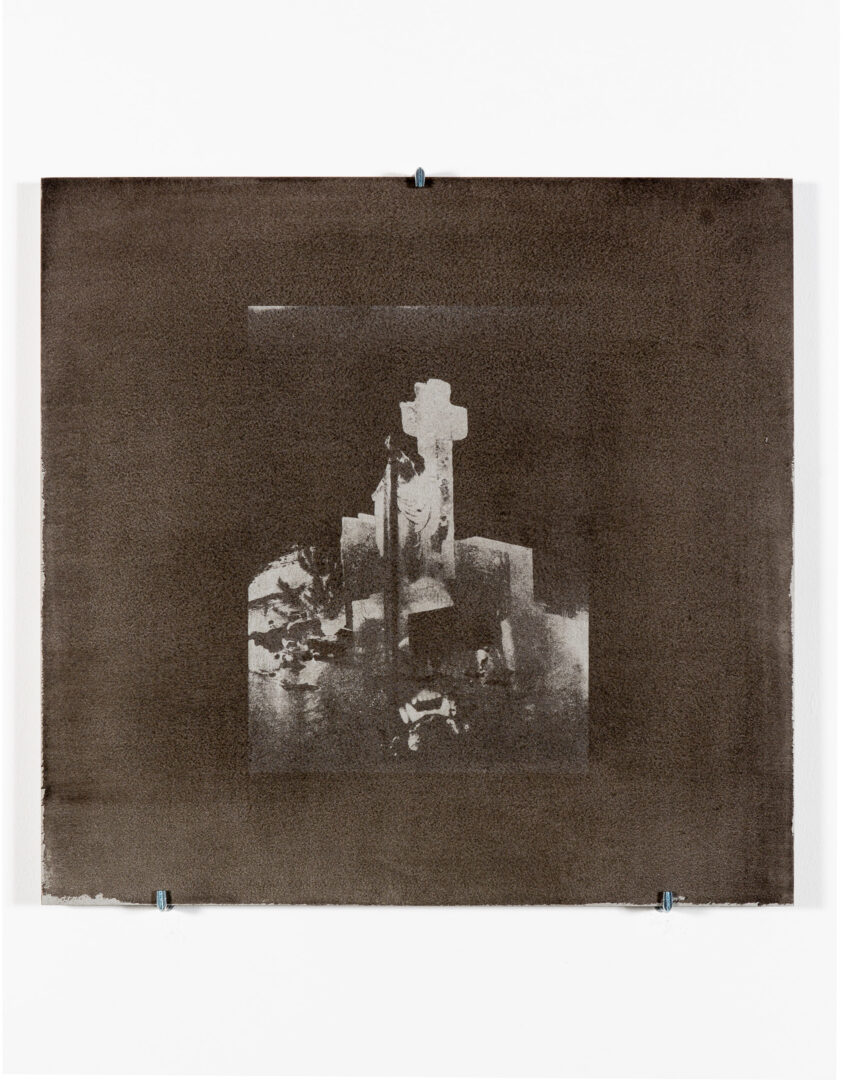
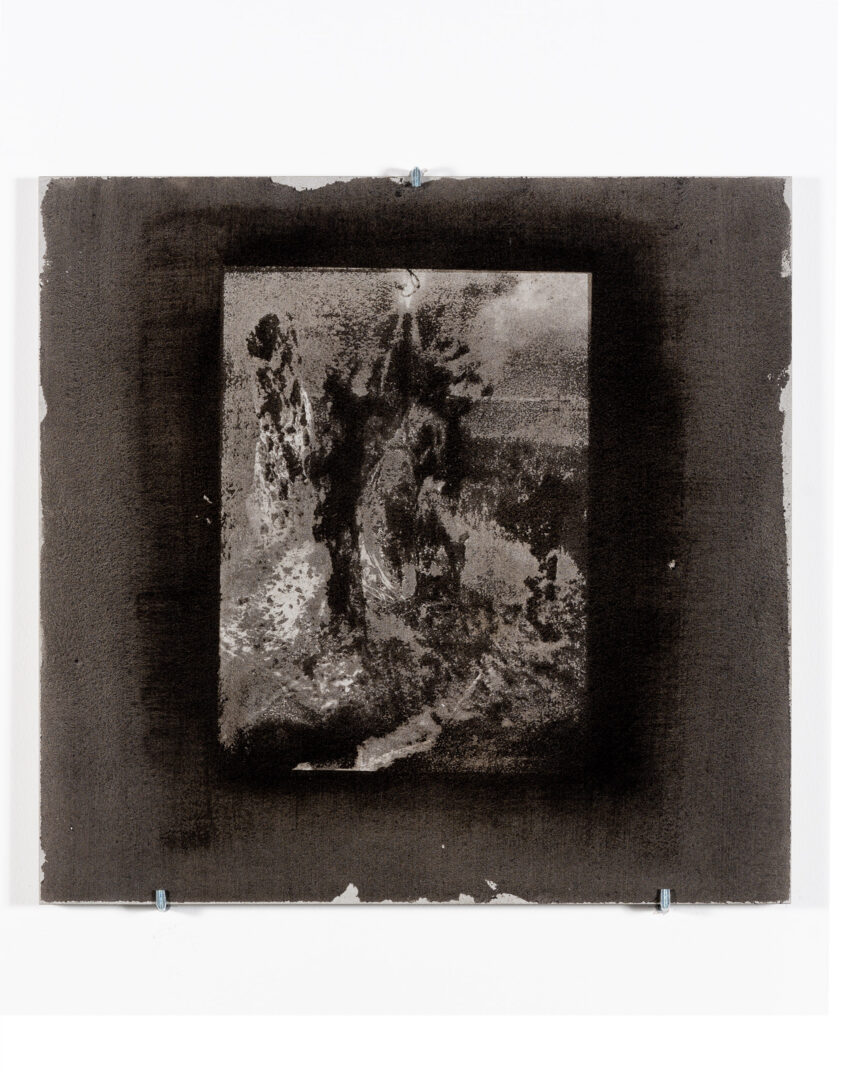
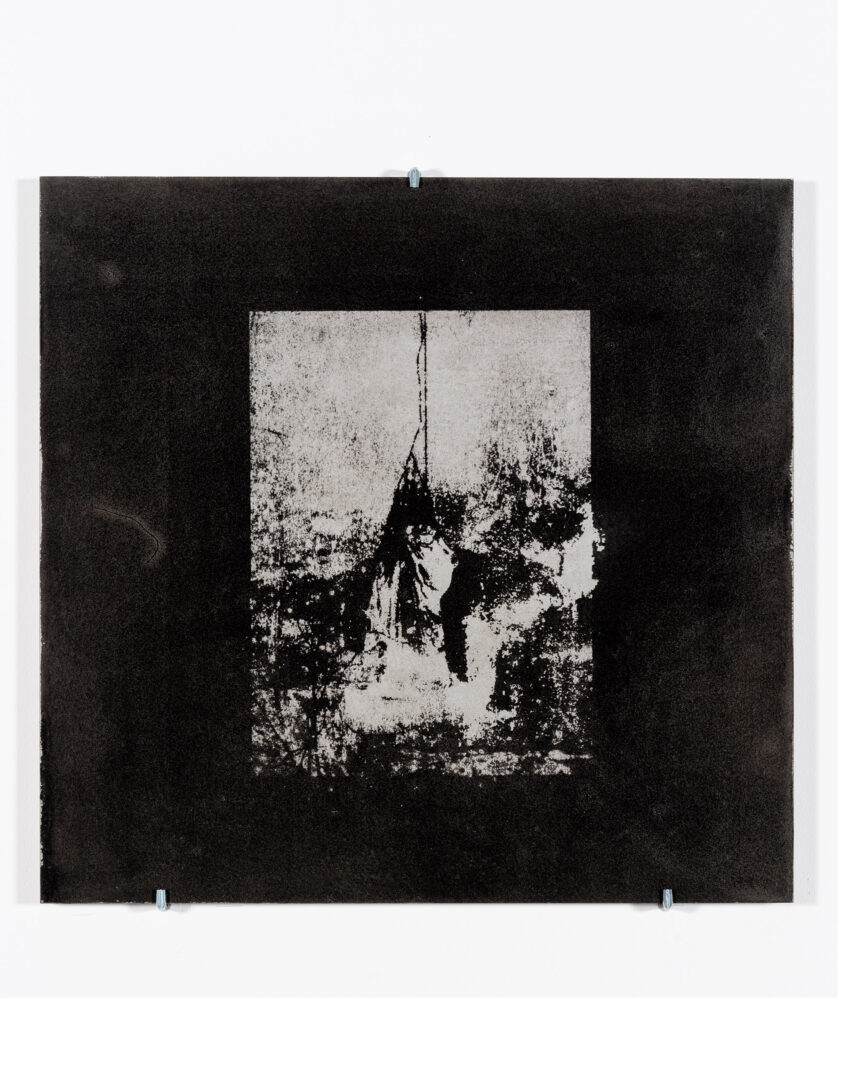
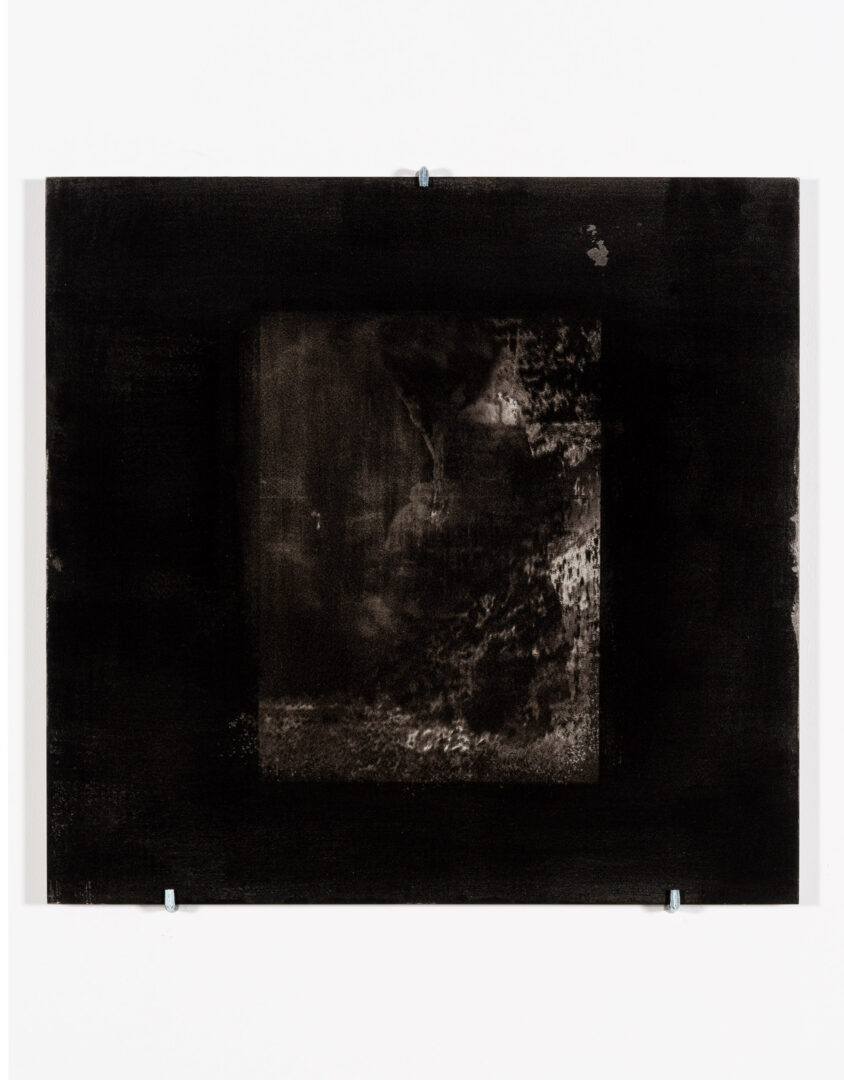
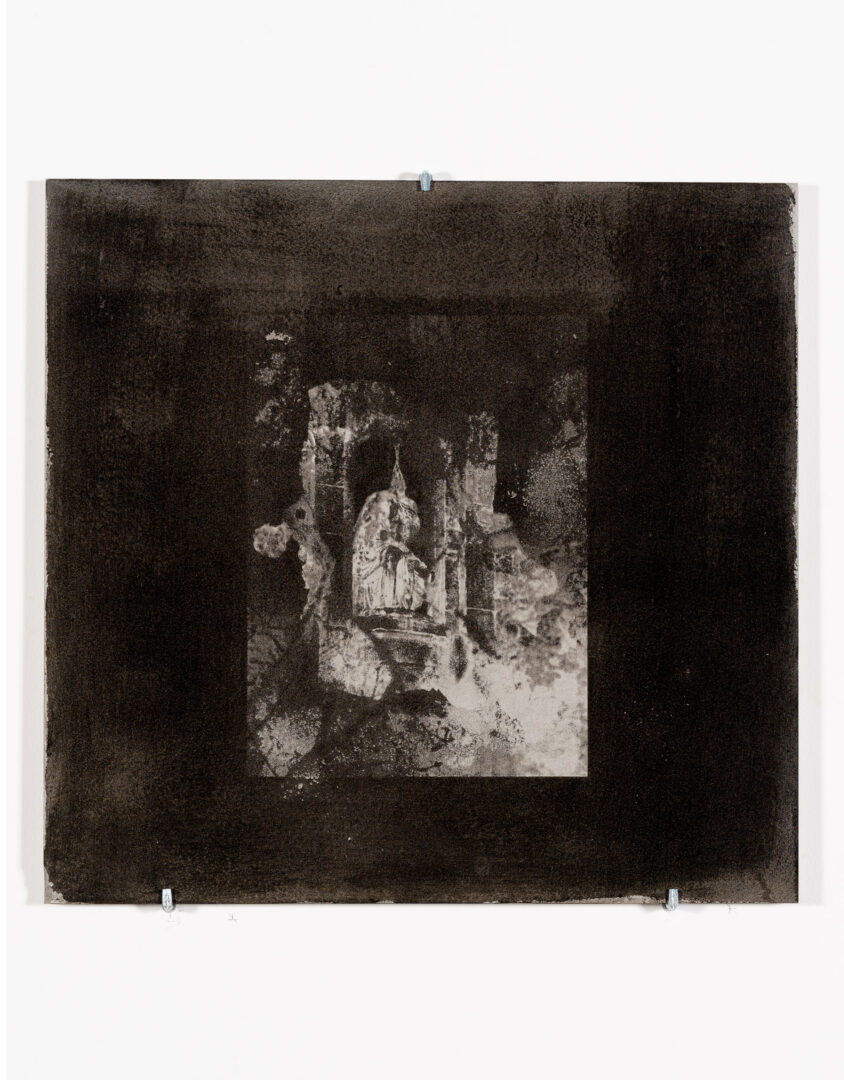
In the shadowed chambers of *binary in-situ* at Fahrenheit Space Berlin in 2021, Martin Wühler’s triptych *Der Sand aus den Urnen*—three works on aluminum Dibond, each 90 x 120 cm, executed in the demanding gum bichromate process—returns us to the haunted ground where Paul Celan first broke the silence of the postwar years. These monochrome noble prints, atmospheric and heavily veiled, feel less like photographs than like residues: images half-dissolved into their own material, as if the aluminium itself were exhaling mold and forgetting.

Celan’s 1948 collection *Der Sand aus den Urnen*—withdrawn by the poet for its typographical flaws yet indelible in its imagery—gave the world the house of forgetting that is mold-green, the beheaded minstrel, the sand traced by a festering toe. Wühler’s triptych does not illustrate these poems so much as breathe their same air of ash and aftermath. Made amid the Omicron wave and the gathering shadows of larger catastrophe, the works extend the earlier conversation between eroded stone and historical memory.

**Der Sand aus den Urnen – Corona** shows a kneeling angel on Dresden’s Innerer Neustädter Friedhof, hands broken off, its form supported by stark structural braces that emits light like accusatory fingers. In the distance, a great fire glows on the horizon. Celan’s “Corona,” that tender, erotic circling of time and love (“we love each other like poppy and memory”), here turns ominous. Wühler’s corona is not the crown of lovers but the viral halo and the premonition of war—the Russian invasion of Ukraine already visible on the horizon in 2021. The broken angel kneels in perpetual supplication, its mutilated grace a harbinger rather than a consolation.

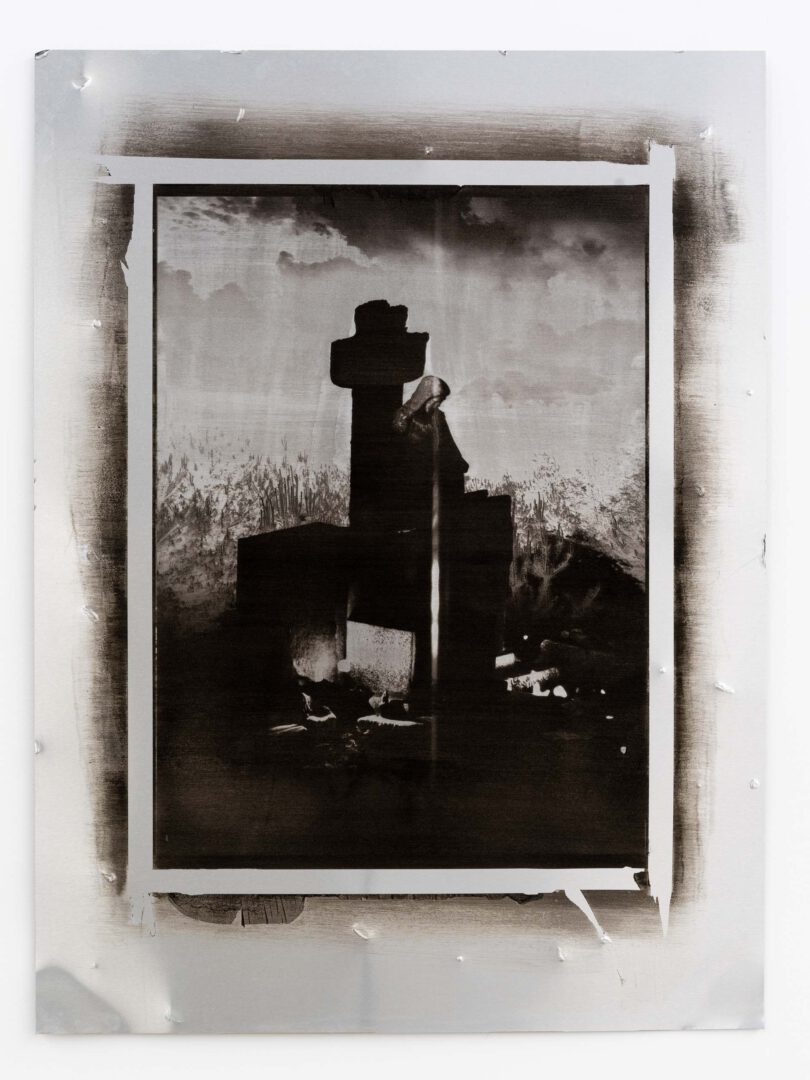
**Der Sand aus den Urnen – Mohn & Gedächtnis** draws from Leipzig’s Lindenauer Friedhof: a Jesus figure gazing downward from the cross, while at the lower edge the snarling snout and teeth of a bloodhound emerge from the earth. Behind rises a dark pine forest over sandy soil. Celan’s *Mohn und Gedächtnis* (Poppy and Memory) is the volume that made his name, the one in which personal and collective trauma flower together. Wühler’s image literalizes the threat from below—the persecution rising from the underworld of the unconscious, the hounds of memory loosed again. Poppy for forgetting, memory for the inescapable bite: the work holds both in uneasy suspension.

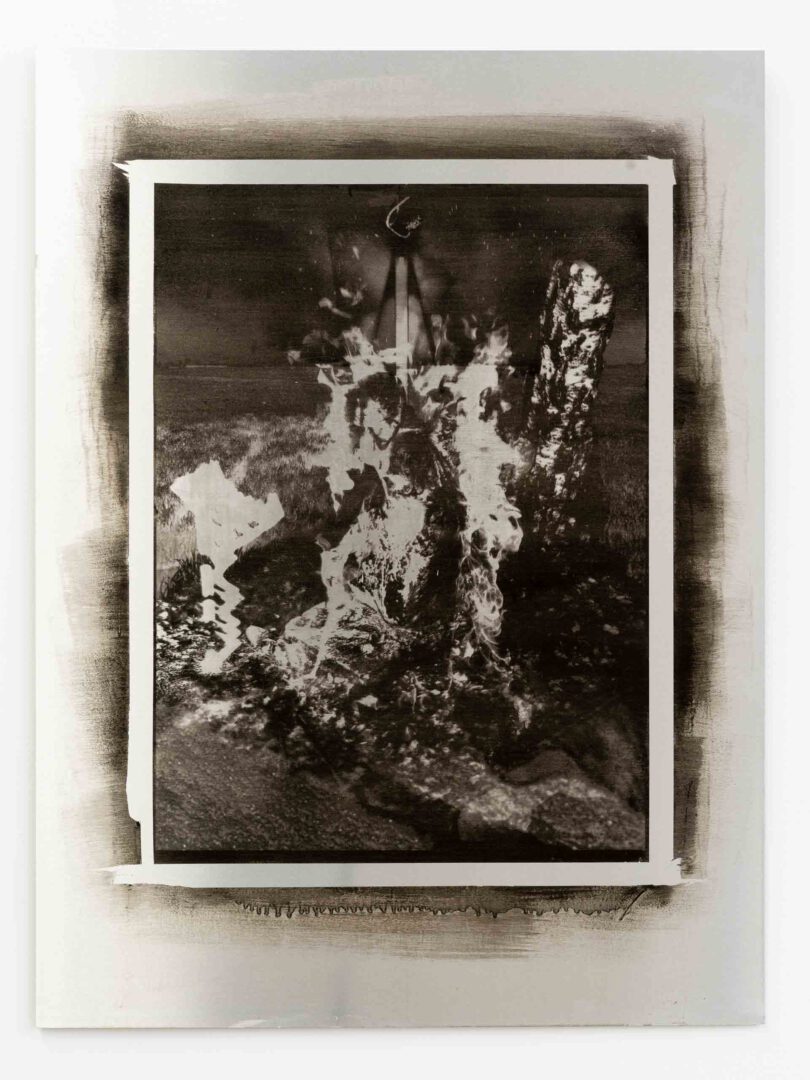
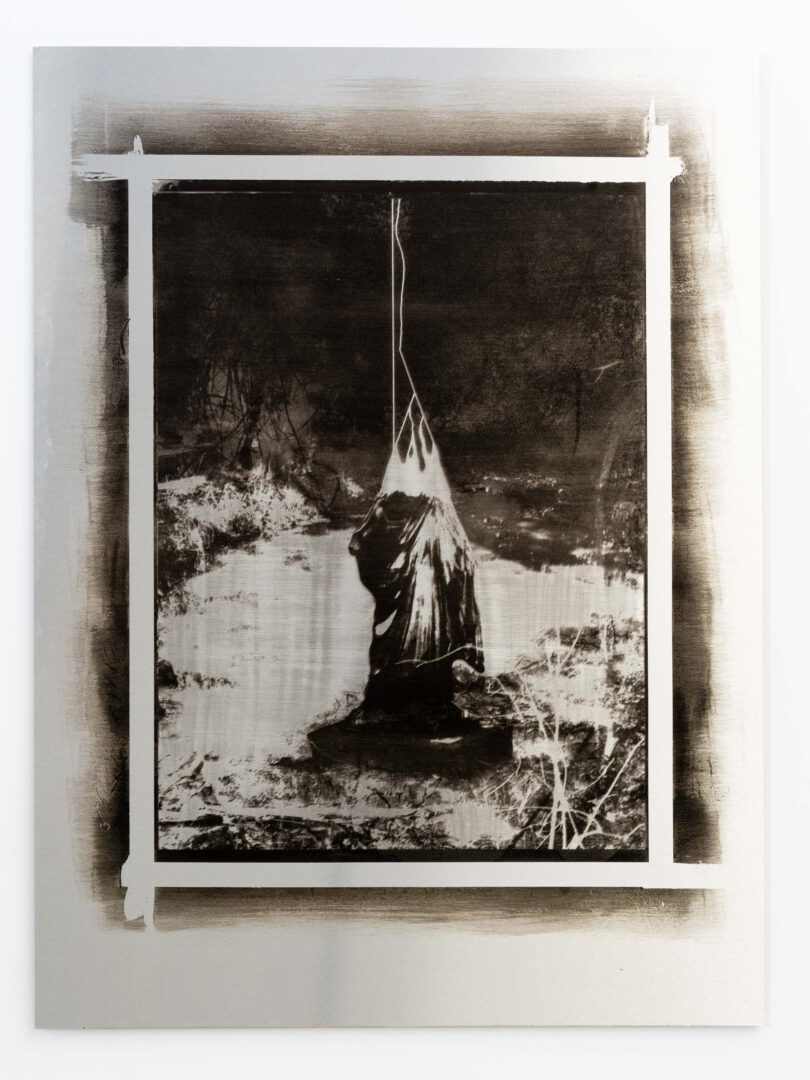
**Der Sand aus den Urnen – Gegenlicht** presents a headless sculpture—likely another Christ—on the same Dresden cemetery ground, its support structure so configured that the figure could stand on its head. The background is a swampy stretch of Leipzig’s Auenwald. Celan’s occasional use of *Gegenlicht* (backlight or contre-jour) evokes illumination from behind, a silhouette that both reveals and obscures. Here it becomes a symbol of headlessness in the swamp of contemporary events—disorientation, inversion, loss of reason—yet the title carries a faint promise: light from the opposite direction, a possible clearing. The print’s deep blacks and ghostly highlights make the sculpture appear to hover, half-submerged, between worlds.

Hung together, the three panels form a modern stations of the cross in which the crosses themselves have crumbled. The gum bichromate surfaces, with their organic, almost moss-like texture, echo the earlier *Epitaphe* slabs while deepening the Celanian dialogue. Where *The Sand from the Urns* once confronted the Holocaust’s unburied dead, Wühler’s triptych faces new cycles of plague, polarization, and impending war. The eroded sculptures, the fires, the hounds, the swamp—these are not metaphors but material facts, printed in noble melancholy.

In the context of the exhibition, opposite the sticky materiality of *Black Fatigue* and *White Fragility*, these quieter, more elegiac prints offer a counterpoint: the long historical view against the hot-glue immediacy of the culture war. Wühler does not console. Like Celan, he insists on precision amid dissolution. One stands before these images and feels the sand running—not through an hourglass, but through the fingers of the living, grain by grain, into the urns of forgetting. Yet in the act of looking, memory stubbornly persists.

White Fragility
black fatigue
Astroturfing

Look, I walked into the back rooms of *binary in-situ* at Fahrenheit Space Berlin in 2021 and thought: finally, somebody isn’t tiptoeing around the identity-war fatigue that was choking the art world and everything else during the BLM summer and its long hangover. Martin Wühler didn’t give us lectures or Instagram-ready slogans. He gave us sticky, ugly, funny, and dead-serious objects that smell like the inside of a culture war.

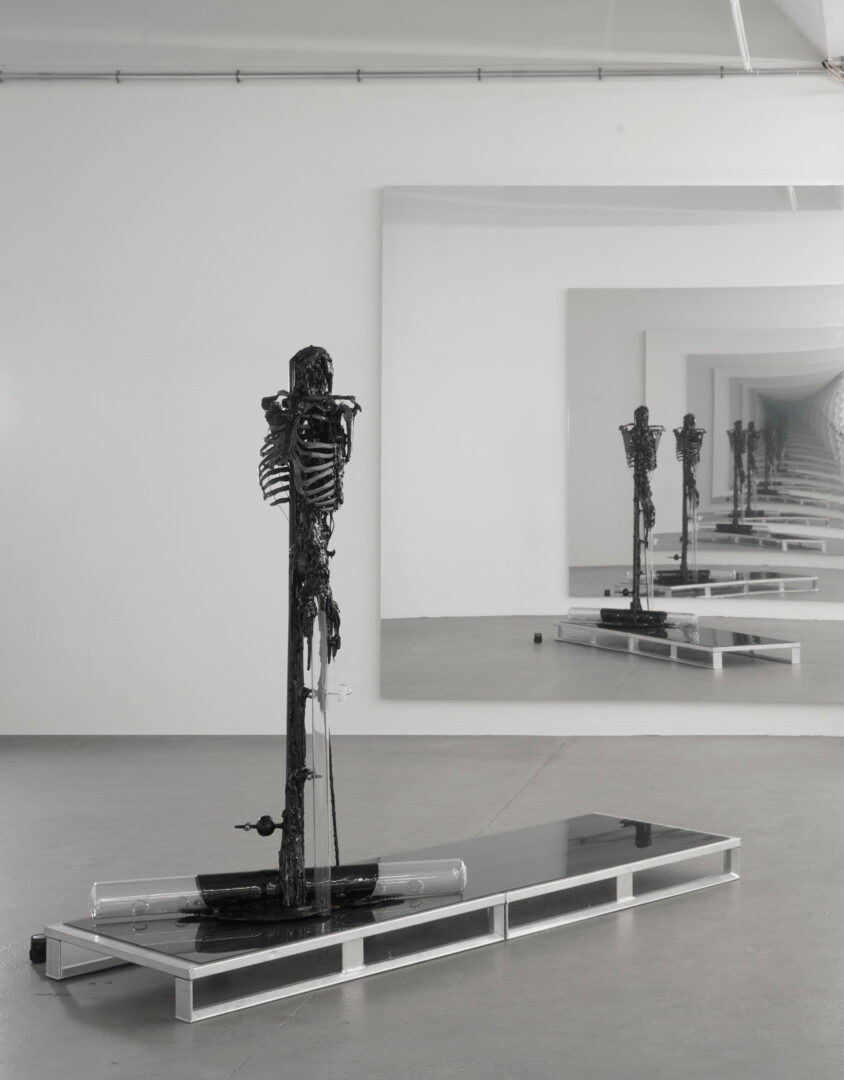
**Black Fatigue** is the one that hits you first in the gut. A donated skeleton torso (no head, no arms, no legs) from the Dresden art academy archive sits on laboratory glass flasks like some failed science experiment. Ten kilos of black hot glue have been dumped over the whole thing—encasing the bones, dripping down the flasks, pooling into a shiny, tar-like lake on a big sheet of ESG safety glass that rests on aluminum pallets. The piece is trapped between two mirrors, creating an infinity effect: endless black skeletons receding into the void. It’s grotesque and hypnotic. 

Black fatigue—the real kind, the exhaustion inside communities from repetitive, self-destructive patterns nobody wants to name out loud—is right there in the material. This isn’t a victim sculpture; it’s a drained, immobilized thing drowning in its own residue, multiplying forever in the mirrors. Wühler turns social exhaustion into something physical you can almost smell. Ten kilos of hot glue. That’s commitment.

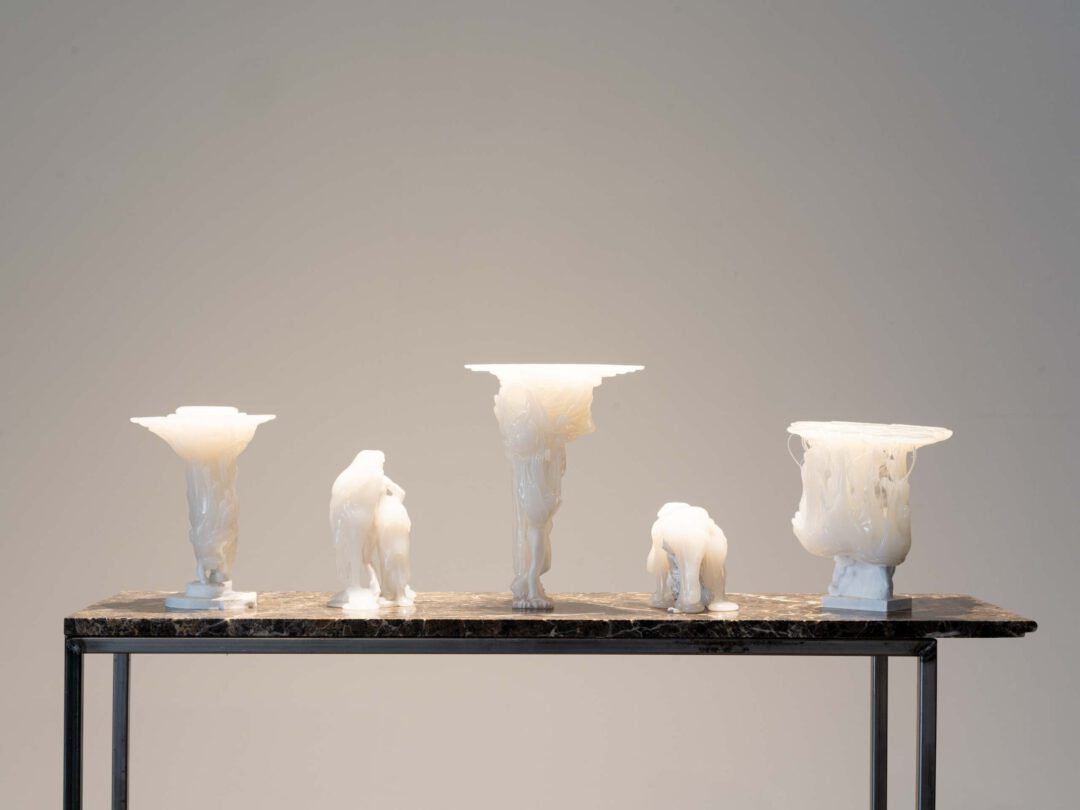
Then you go into another room—deliberately separated, you can’t see both at once—and you meet **White Fragility**. Five 3D-printed classical sculptures (Nymph, Hermes, Naiad, Ariadne, Thinker) stand on a fancy Italian marble plinth on a steel frame, each absolutely slathered in thick white hot glue. The white-on-white goo drips, clots, and smothers the European cultural icons beneath. It’s nasty in the best way. The whole setup feels like a cramped crypt or a paranoid gated community: tight, self-regarding, precious. 

Wühler is doing something sharp here. He puts *Black Fatigue* and *White Fragility* in conversation by keeping them apart, forcing you to experience them as isolated phenomena. Both are social-engineering weapons, ready-made concepts designed to shut down self-reflection and keep people punching sideways at each other instead of looking inward. One side’s exhaustion, the other side’s defensive tears—same game. The works were made right in the thick of the 2020–21 frenzy, and they feel like artifacts from a moment when everyone was performing their fragility or their fatigue on cue.

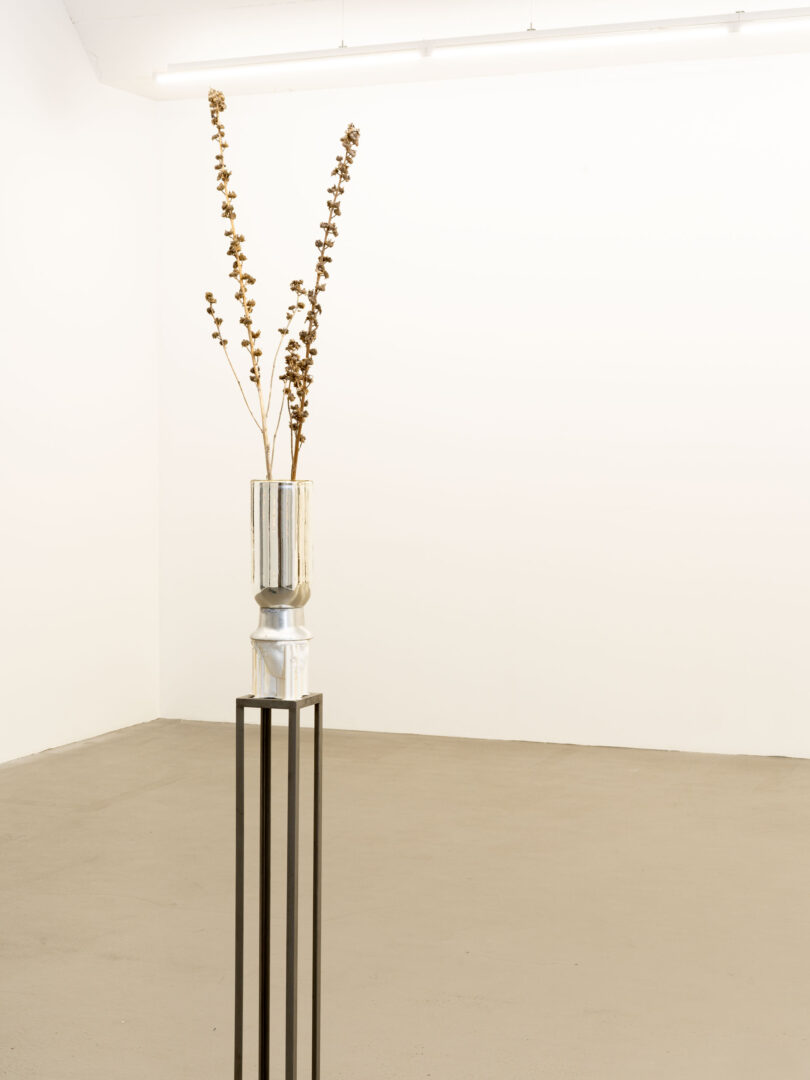
And then there’s **Astroturfing (Graswurzelbewegung)**—the title alone is a savage little joke. “Grassroots movement” versus the fake corporate-sponsored version. A steel frame holds a white 3D-printed head of a Roman noblewoman, sliced flat across the forehead like a Brutalist haircut. On that platform sits an old East German “Isola” yogurt maker, turned into a pathetic vase with one completely dried-out, brittle plant sticking up. Fake roots, dead plant, hollow symbolism. It’s perfect. Astroturfing always looks organic until it crisps up and blows away.

These three pieces together feel like Wühler’s autopsy of the early-2020s culture war. The materials—hot glue, 3D prints, mirrors, marble, pallets—are deliberately un-precious, almost cynical. Nothing is transcendent; everything is sticky, manufactured, or desiccated. He’s not taking sides so much as showing the shared poverty of self-awareness on all sides. Political actors, activists, institutions—nobody comes out looking good.

I left the space thinking this is the kind of work the art world needs more of: not comforting, not performative, not aligned. Just cold, material intelligence staring back at the mess we made. Wühler didn’t solve anything. He just refused to lie about it. 

Tenax Vitæ: Epitaphe

Tenax Vitæ. The phrase clings, Latin for “tenacious of life,” or more viscerally, “clinging to life.” It summons the dramatic sculpture by Rinaldo Carnielo (c. 1893), in which a desperate young man grapples with skeletal Death itself, fingers locked around the bony leg of the reaper as if sheer mortal stubbornness might forestall the inevitable. The title carries that same tensile energy into Wühler’s work: a fierce, almost animal refusal of oblivion, enacted not through heroic bronze but through the slow, erosive patience of stone and memory.

Epitaphe. Here the classical restraint of the funerary marker meets the blunt finality of the German Epitaph. These are not grandiloquent inscriptions meant to console the living but silent, weathered slabs—markers stripped of names, dates, and comforting pieties. They stand as mute witnesses to lives that have already slipped into the anonymous earth, their surfaces colonized by time rather than carved by human intent.

The work itself consists of six heavy stone slabs—dense Taina Grey porcelain stoneware outdoor tiles—arrayed in a solemn horizontal row, hung at equal intervals on the wall with heavy-duty hooks. Each bears a digital collage built from 3D scans of Wilhelmine-era funerary sculptures from Leipzig and Dresden cemeteries. These once-sentimental figures—angels, Christs, mourning women—appear in states of severe erosion: a headless Jesus, a female form shorn of arms and cranium. Wühler overlays them with images drawn from his own family archive, then transfers the composite onto the stone via the gum bichromate process, a demanding 19th-century “noble print” technique. The result is monochrome, deep black, the original photographs and scans barely legible. What remains feels less like photography than like the slow encroachment of moss or lichen across a grave marker—organic, atmospheric, mournful. These are gravestones of unknown people, inscriptions long since effaced.

Part of the exhibition binary in-situ at Fahrenheit Space Berlin in 2021, the installation arrived at the height of the COVID-19 pandemic. Omicron hysteria gripped the country; exclusion of the unvaccinated reached its cruel zenith. In that atmosphere of collective dread and enforced separation, Wühler’s slabs resonated with particular force—physical objects that insisted on presence while embodying absence, endurance while courting decay.

In the same room hangs The Sand from the Urns, a triptych on aluminum Dibond. The title directly invokes Paul Celan’s early collection Der Sand aus den Urnen (1948), and especially its title poem, with its mold-green house of oblivion, its beheaded minstrel drumming on moss and bitter pubic hair, its festering toe tracing lost features in the sand. Celan’s verses are saturated with the Holocaust’s ash and memory; Wühler’s slabs echo that same haunted materiality. Both works grapple with what remains after catastrophe—sand in urns, eroded stone, images that dissolve into their own surfaces. The connection is not illustrative but atmospheric: a shared poetics of the remnant, where language and likeness alike fray into something older and more elemental.

Opposite these works one encounters Synthetic media – or an object that never existed and the wall-filling mirror Staying Together at a Distance, fabricated from Mystic Mirror film stretched over an aluminum frame. The mirror reflects the viewer back into the room, fracturing the solemn procession of slabs into infinite, ghostly repetitions while underscoring the pandemic’s cruel paradox: proximity without contact, community at a remove. Wühler’s Epitaphe thus sits in a charged constellation—eroded memory facing synthetic unreality, stone facing mirror, the tenacious grip on life confronting its own spectral multiplication.

In the end, these six black slabs do what the best funerary art has always done: they make mortality palpable without offering false comfort. They are heavy, obdurate, and strangely beautiful, like grief itself when it has settled into its final, enduring form. One leaves the room quieter, carrying a little more of the stone’s weight.


synthetic media
or an object that never existed

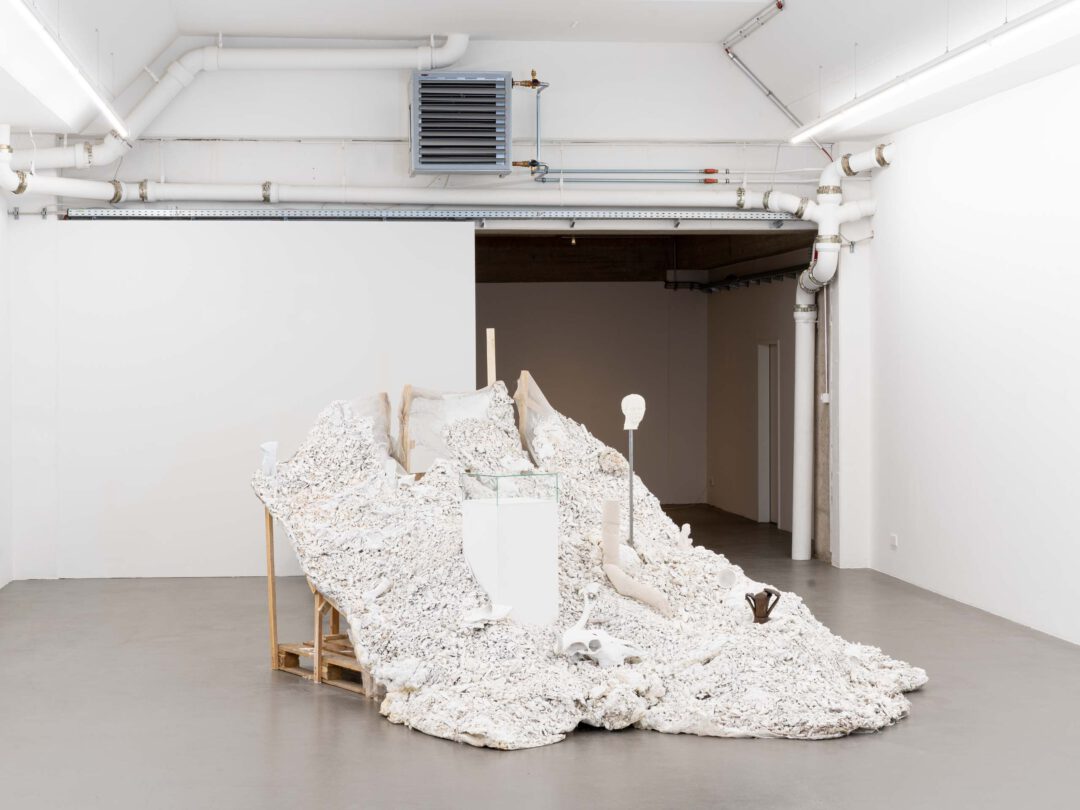
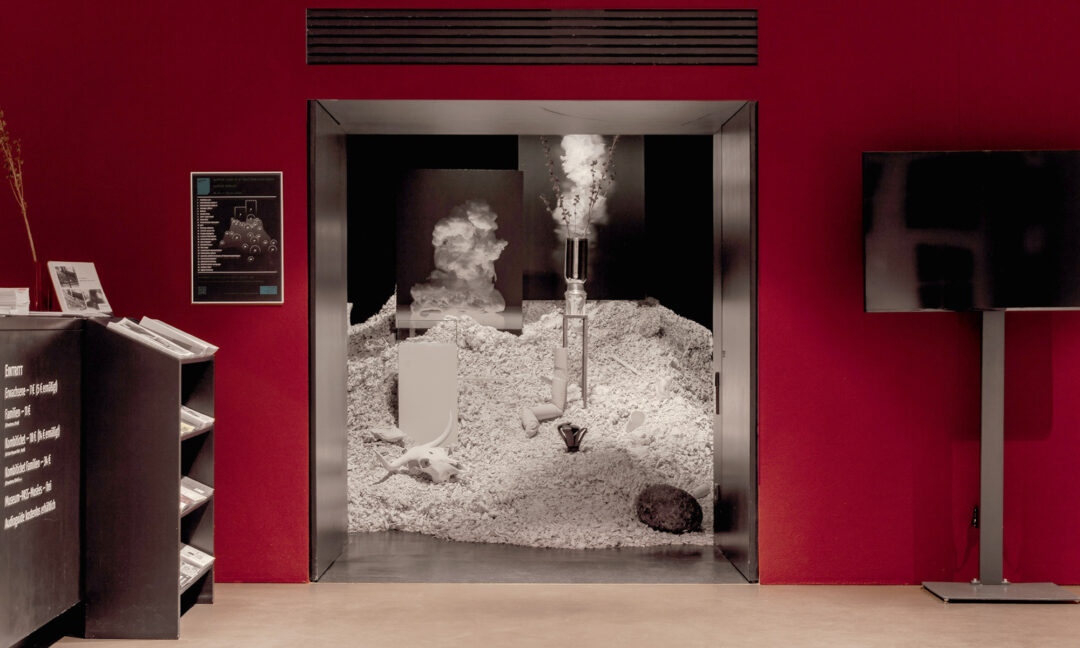
In the compact white cube of Studio 45 cbm at Kunsthalle Baden-Baden, Martin Wühler erected a modest yet quietly devastating monument to the slippage between what is and what might be. Titled Synthetic Media or an Object That Never Existed, the installation feels at once like a grave, a reliquary, a child’s sandbox after the flood, and a half-remembered dream. A low mountain of bark mulch, dyed an absolute, funereal white, rises from the floor. Scattered across and partly buried in it are objects—some found, some printed, all surrendered to the same chalky pallor—that refuse to declare their ontological status.

Wühler, born in Erfurt in 1983, has always been a wry interrogator of the digital uncanny. Here he goes further. The exhibition flyer announces, with deadpan glee: “This person does not exist: Martin Wühler.” The rest of the text is little more than a constellation of borrowed digital terminology. The joke lands like a Zen koan delivered by a neural network. Who, exactly, is presenting what to whom?

The physical presence of the work is seductive and slightly repulsive in the best sense. The white mulch has the texture of desiccated bone meal or fresh snow that has already begun to melt. Upon it rest devotional fragments: personal mementos gifted by friends, now stripped of their original color and context, alongside 3D-printed sculptures—an athlete, the head of a noble lady, a Narcissus—whose telltale support structures still cling to them like skeletal scaffolding. These plastic ghosts carry the visible archaeology of their own making. One empty vitrine on a plinth is labeled, according to the accompanying schematic map, “Deep Fake.” The map itself, hung nearby, pairs each object with an internet-derived term that bears no obvious relation to its form, cheerfully severing any last claim to stable meaning.

The ensemble reads as a kind of post-apocalyptic Wunderkammer, or, as curator Hendrik Bündge memorably put it, a “graveyard of devotional objects.” A thirty-kilogram river stone hauled by Bündge himself from the Oos, the stream that runs through Baden-Baden, anchors the scene like a stubborn piece of old reality refusing to dissolve. Everything else feels provisional, borrowed, or algorithmically hallucinated. Wühler has described the piece as a humorous dissection of the components of an artificial intelligence—input, training data, rendering, projection, absence—yet the humor is melancholic, almost tender.

The installation was conceived in a dream and realized in the anxious early weeks before the first German lockdown in 2020, when the physical world itself began to feel synthetic and the screen became the primary site of social and aesthetic encounter. That timing is not incidental. The work’s whiteout aesthetic and its deliberate blurring of the real and the fabricated speak precisely to that moment when the boundary between lived experience and mediated simulation grew porous and then nearly invisible.

Later, when the installation traveled to Fahrenheit Space in Berlin, Wühler broke the fourth wall. Viewers were invited behind the mountain; the illusion of the mound was deconstructed, its humble plywood armature and piled mulch exposed. The gesture was characteristic: just when you begin to luxuriate in the poetic fiction, the artist reminds you that even the fiction is constructed, and that the construction, too, is worth looking at.
In Synthetic Media or an Object That Never Existed, Martin Wühler does not merely comment on the age of deepfakes, generative imagery, and virtual selves. He builds a small, fragile altar to their existential consequences. The work is funny, elegiac, and strangely moving. Standing before it, one feels the gentle vertigo of a culture that has begun to outsource not only its images but its sense of what counts as real. Wühler’s mountain is not large, yet it casts a long shadow. One leaves wondering, not without a smile, whether any of us still exist in quite the way we used to.

Sechs Wochen


In the final chapter of the ambitious “Six Weeks Pop-up Gallery” on Leipzig’s Karl-Liebknecht-Straße — which ultimately stretched into seven intense weeks — Martin Wühler delivered not the exhibition that had been planned, but one that was far more necessary. What was intended to be the clean, contemplative conclusion to the project became *Sechs Wochen*, a sharp, site-specific critique of the art world’s own machinery, born directly from the debris of its activity.

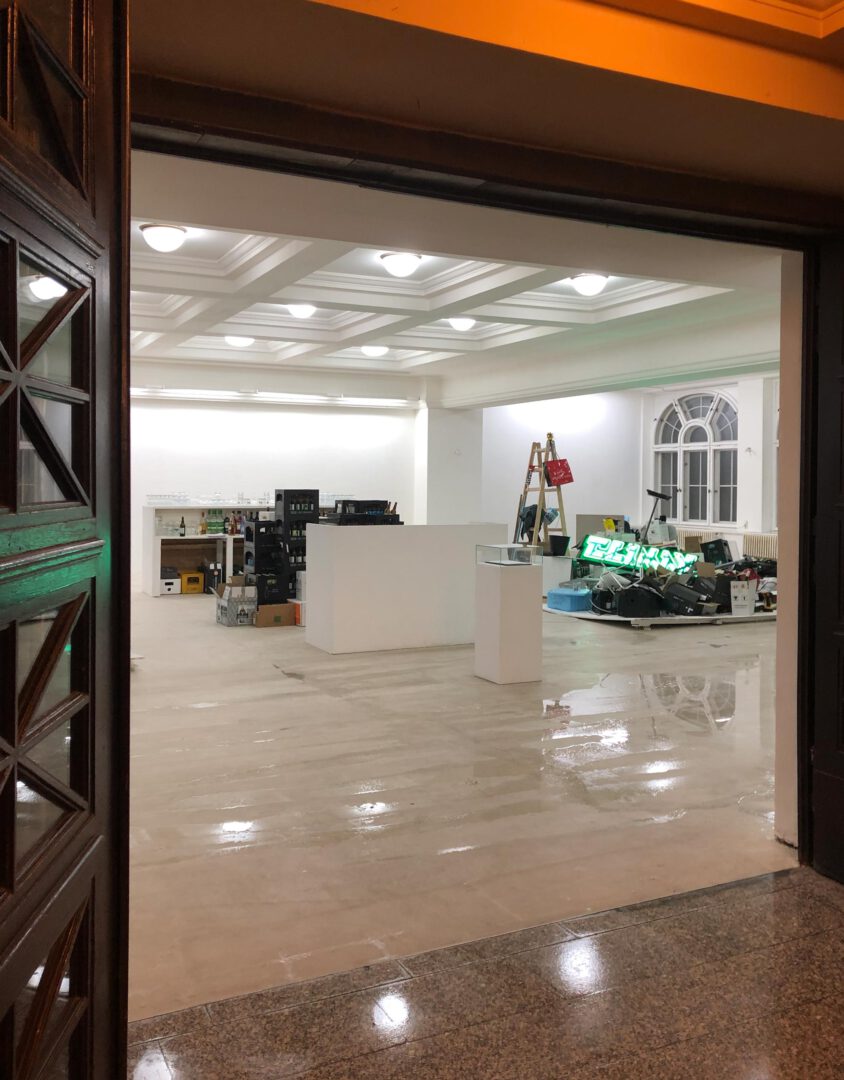
The agreement had been clear: the ground-floor space in the Georg-Wünschmann-Haus would be left completely empty for Wühler’s final presentation. Instead, when the artist arrived, he encountered the unfiltered aftermath of six weeks of intense programming — the accumulated waste of six exhibitions, six openings, and constant turnover. Discarded promotional material, empty drink crates from the makeshift bar, neglected artworks, tools, display panels (Stellwände), and general clutter filled the once-white rooms. The gallerists Sabrina Markutzyk and Kristina Jahreis of the “shebang” collective had been too consumed by the momentum of the project to clear the space.

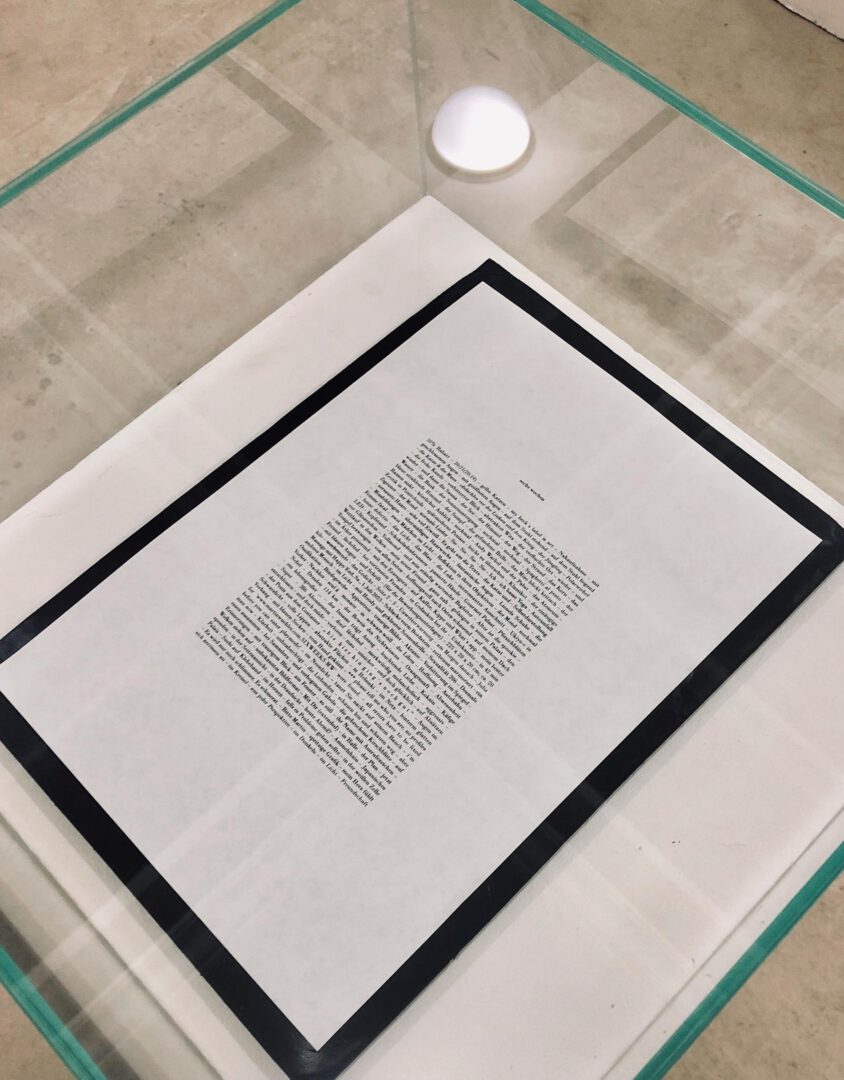
Rather than retreating into frustration or attempting to sanitize the room for his originally planned Augmented Reality exhibition with signature sculptural works, Wühler chose radical adaptation. He transformed the very remnants of the gallery’s operation into the material of the show itself. The large display walls were repurposed as monumental plinths, upon which he carefully arranged the complete detritus of the preceding weeks. The bar structure was repositioned as a central element between these two accumulations — a relic of social lubrication now standing amid the evidence of its own excess. In front of this landscape of leftovers, Wühler placed a vitrine containing a single A4 sheet. On it, through auto-poetic chain of associations (“Autopoesie”), he listed every image in his camera roll from the previous six weeks, each reduced to a single word or short phrase — a minimalist catalogue-poem hovering between documentation and elegy.

The result is a powerful institutional critique that feels both playful and merciless. Where the earlier exhibitions in the series celebrated individual artistic positions (such as the harmonious dialogue between Carina Brandes’ surreal photographs and Susanne Hopmann’s installation *Anima Vestra*), Wühler’s intervention turns the gaze back onto the conditions of production and presentation themselves. The pop-up gallery’s idealistic energy — its ambition, its gender-balanced curatorial vision, its spontaneous communal spirit — is suddenly laid bare in all its material consequences. Beauty, ephemerality, and institutional fatigue coexist in the same room.

Wühler’s move resonates especially strongly because it refuses the usual white-cube illusion. Instead of hiding the labor, the waste, and the disposability inherent in rapid exhibition cycles, he elevates them. The installation becomes a mirror held up to the art system: enthusiastic, productive, and inevitably messy. In doing so, he also gently questions the romantic narrative of the independent pop-up space itself. Even the most well-intentioned alternative structures eventually produce their own ruins.

*Sechs Wochen* stands as a fitting, if unexpected, finale to the “Six Weeks” project. What began as a spontaneous idea between two driven women evolved into a living experiment — and Wühler ensured that the final act acknowledged the full reality of that experiment, not just its curated highlights. In the end, the most honest exhibition was the one that allowed the gallery to show its own scars.


Hot Options

Hot Options
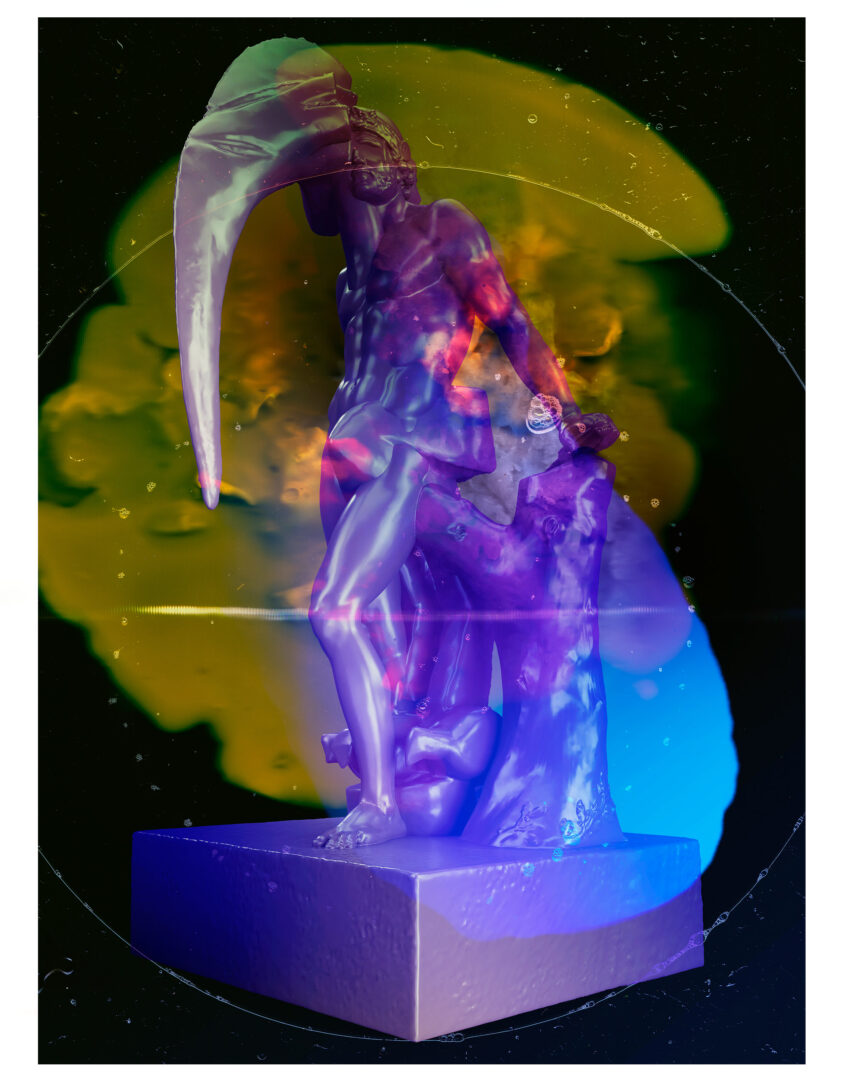
Martin Wühler’s three pigment prints, Mercurius, Venus, and Mars, greet the viewer at W139 like emissaries from a world in which the gods have gone digital and returned wearing new skins. Mounted on Alu-Dibond and held in crisp shadow-gap steel frames, they hover with the cool authority of contemporary tech objects while radiating an almost feverish chromatic heat. The exhibition Sublime Eroding (2015) provided the perfect stage: a raw artist-run space tucked into Amsterdam’s historic center, steps from the Beurs van Berlage, that former temple of trade where capital once moved with mercantile swagger. Here, commerce and contemplation have long shared uneasy quarters. Wühler’s works feel right at home—hot options in every sense.

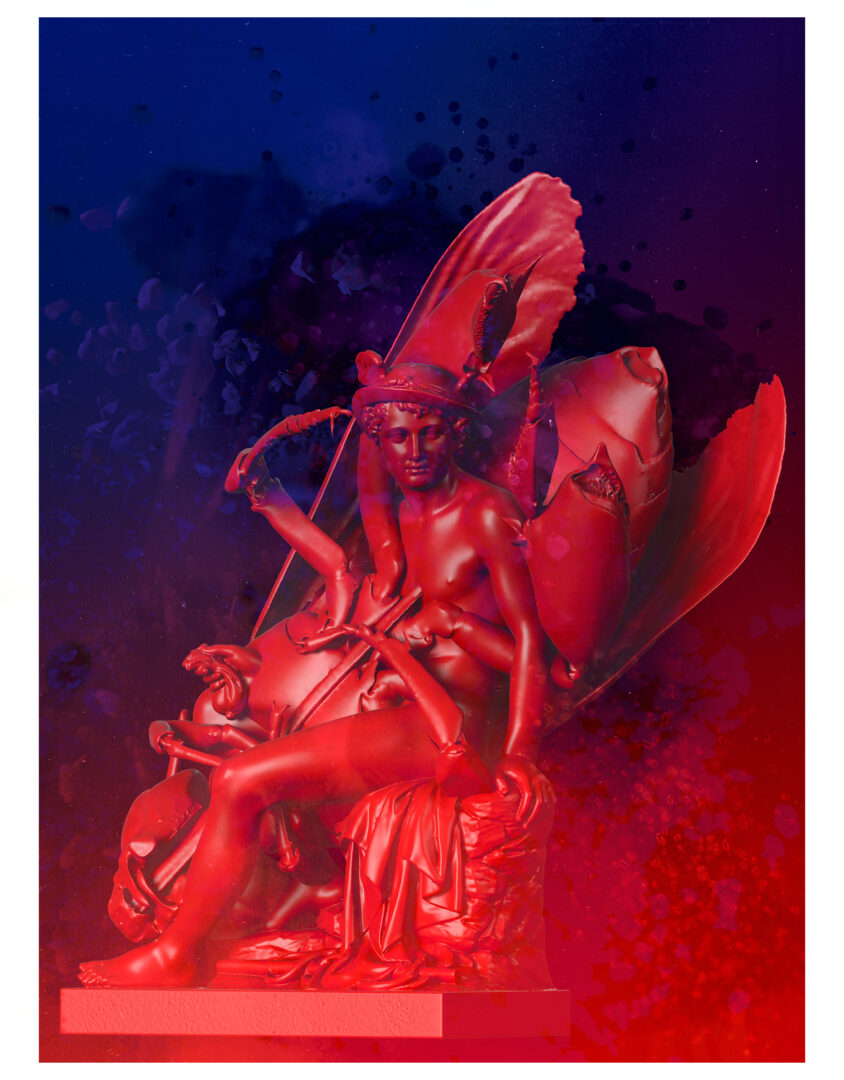
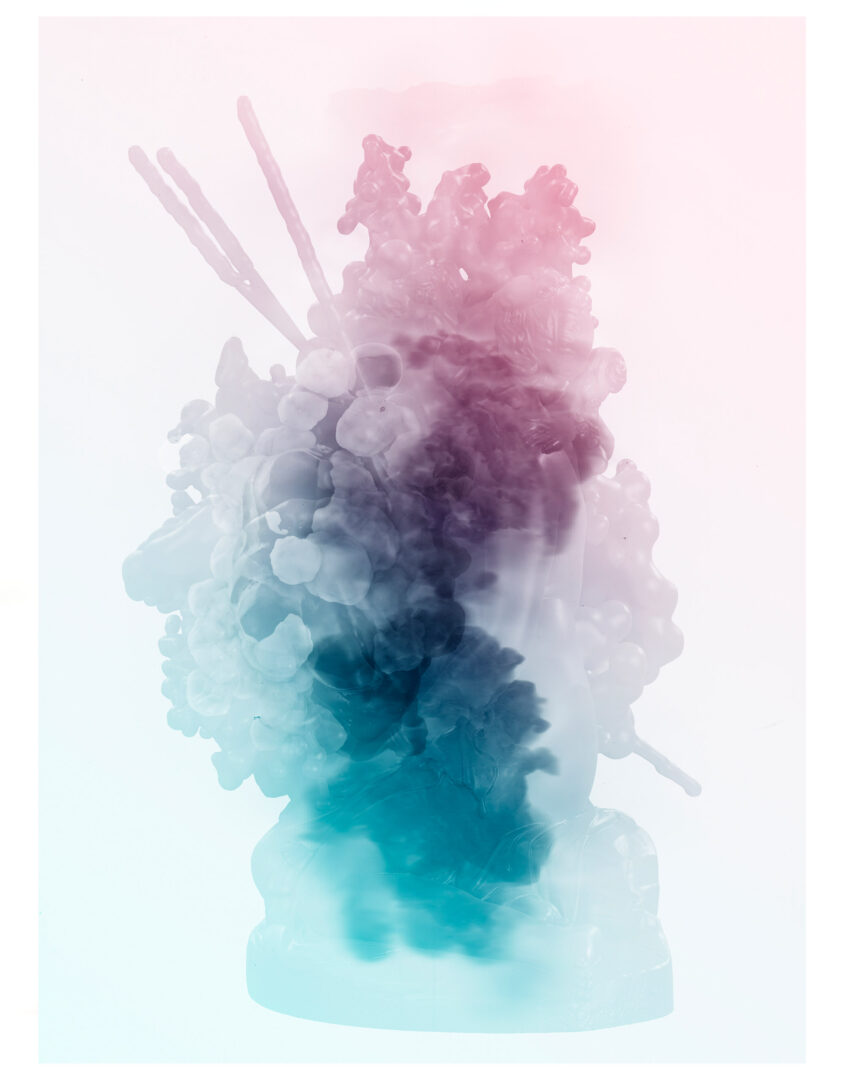
Each piece begins with classical sculpture—Mercurius, Venus, Mars—those enduring avatars of speed, desire, and strife. Wühler folds them into dense digital collages inside a 3D environment, layering scans and models drawn from his archive and beyond: a worker bee in autumnal fall for Mercurius (glowing in saturated red), the ghostly three-dimensional supernova for Venus (a delicate haze of light pink, blue, and dominant white), and, for Mars, a Nigerian war figurine entangled with iridescent soap bubbles amid riotous color. The resulting pigment prints are hybrids in the truest sense. One part cannot be conceived without the other: the digital origin is unmistakable, yet it fuses inseparably with the analogue weight of the print, the industrial sheen of the aluminum, and the architectural presence of the steel frame. As Wühler notes, “the obviously digital origin of the image content merges with the analogue materiality of the image carrier, its steel frame and the space surrounding it.”

These works continue Wühler’s investigation of 3D printing and its afterlives. Where earlier pieces manifested directly as printed objects, Hot Options translates the same logic into two-dimensional hybrids. Set pieces from art history, science, and personal archives—digitized dust, 1950s photographs of marabous and walruses, wax pours, scanning electron micrographs of viruses and crystals—are recombined and then materialized. The process itself enacts the artist’s core insight: “Digital production and distribution technologies have become the basis of artistic and cultural practice… It is in the blending of analogue and digital manifestations that the truly hybrid objects emerge.”

The title Hot Options, borrowed from Claude Lévi-Strauss, points to societies (or conditions) gripped by rapid transformation—social inequality, armed conflict, intensifying networks, technical acceleration. In such “hot” states, history accelerates and everything is in play. Placing these works near Amsterdam’s old stock exchange sharpens the resonance. Finance is the ultimate hot option machine: abstract value circulating at blinding speed, remixing the world’s materials and meanings. Wühler’s layered image-memories mirror this ceaseless recombination. They draw from “the collective image memory of the constantly moving digital archive,” lifting fragments out of circulation and granting them fresh, sometimes uneasy potential.
Yet the exhibition’s theme, Sublime Eroding, adds a deeper melancholy. The classical sublime—vast, awe-inspiring, often terrifying—once offered Western culture a glimpse of transcendence. 

After the Enlightenment, that sublime began to erode under the pressures of reason, industry, and later the digital flood. Wühler’s gods are no longer Olympian certainties but unstable composites: Mercury the messenger entangled with a fragile bee, Venus born not of sea foam but supernova remnants, Mars armored in bubbles that threaten to burst. The sublime has not vanished; it has migrated into the hybrid, the accelerated, the perpetually recombinant. Its grandeur now carries the pathos of decay and the thrill of reinvention.

Standing before these prints, one senses the migration Wühler describes: “the constantly accelerating migration of objects from analogue to virtual space and vice versa.” In the cool materiality of aluminum and steel, the hot flux of digital imagery finds temporary rest. The result is neither purely virtual nor purely physical, but something new—art that feels both archival and prophetic. In an era when every image is raw material for the next, Wühler reminds us that meaning still emerges through deliberate recontextualization. These are not illustrations of hybridity; they are its eloquent, shimmering proof.

Hot Options:
Prelude

These works are each composed of two objects – digital copies of from the collections of the Lincoln Museum (Lincoln, UK) and the Smithsonian Museum (Washington D.C., USA); they are made available free of charge by the museums, are not subject to copyright protection and may be reproduced as often as desired.

According to the museums, the aim is to make their collections, and especially those objects that cannot be exhibited for conservation reasons, accessible to a wider public outside their geographical catchment area. In addition, museums can document the gradual changes in the objects in their collections. Since a large part of the museum’s holdings is heading towards inexorable decay and not all objects can be equally cared for in terms of conservation and restoration, digitisation is the only way to preserve these holdings, at least as a data set.

The Grassi Museum Leipzig, can only make about three percent of its collection accessible to the public. The presentation of the 3D prints in the display, intended for the permanent exhibition, aimed on the one hand to test the effects of mixing the local collection with foreign works, and on the other hand to question how the handling of cultural assets would change if only the digital dataset were preserved. It remains still to be seen what effects this process will have on the evaluation and reception of art objects and how museums as institutions of preserving cultural heritage will adapt to this conditions of exchangeability.